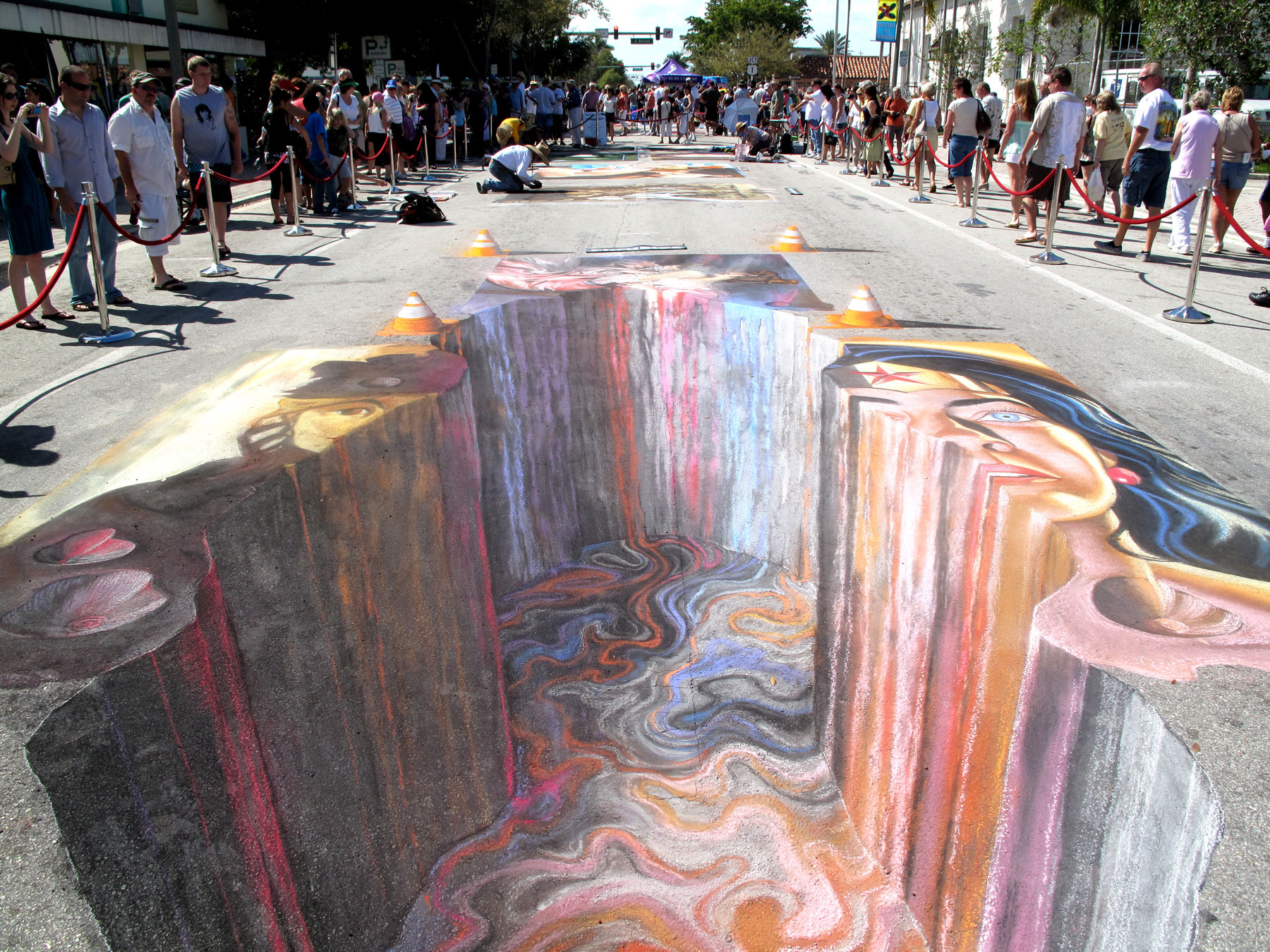
The beginning of what has come to be known as street art, sidewalk art, pavement art, anamorphic art, one-point perspective painting, and a thousand other things is loosely traced back to the 16th century, when paved or cobblestone streets began to replace dirt tracks in many cities. Some say it started in England, where civilization and therefore industrialization boomed, providing the canvas. Others posit that it came from Italy , where art has always flourished.
Whatever the genesis, it has taken on ever more complicated forms as time has gone on and changed the way art is experienced.
Art of the Masses
Pavement art is more than just beautiful pieces, though it is that as well. It takes art out of stuffy galleries where the intent is to be exclusionary and brings it back where art belongs: among the people. The pieces made by the artists below have no cover charge, can’t be bought, and are intended to be experienced by every passer-by, rather than hung in a millionaire’s private study for the enjoyment of one.
Mind-bending and increasingly incredible, here’s some of the most striking pieces of 3D sidewalk art ever made by 10 of the most talented people ever to chalk a walk.
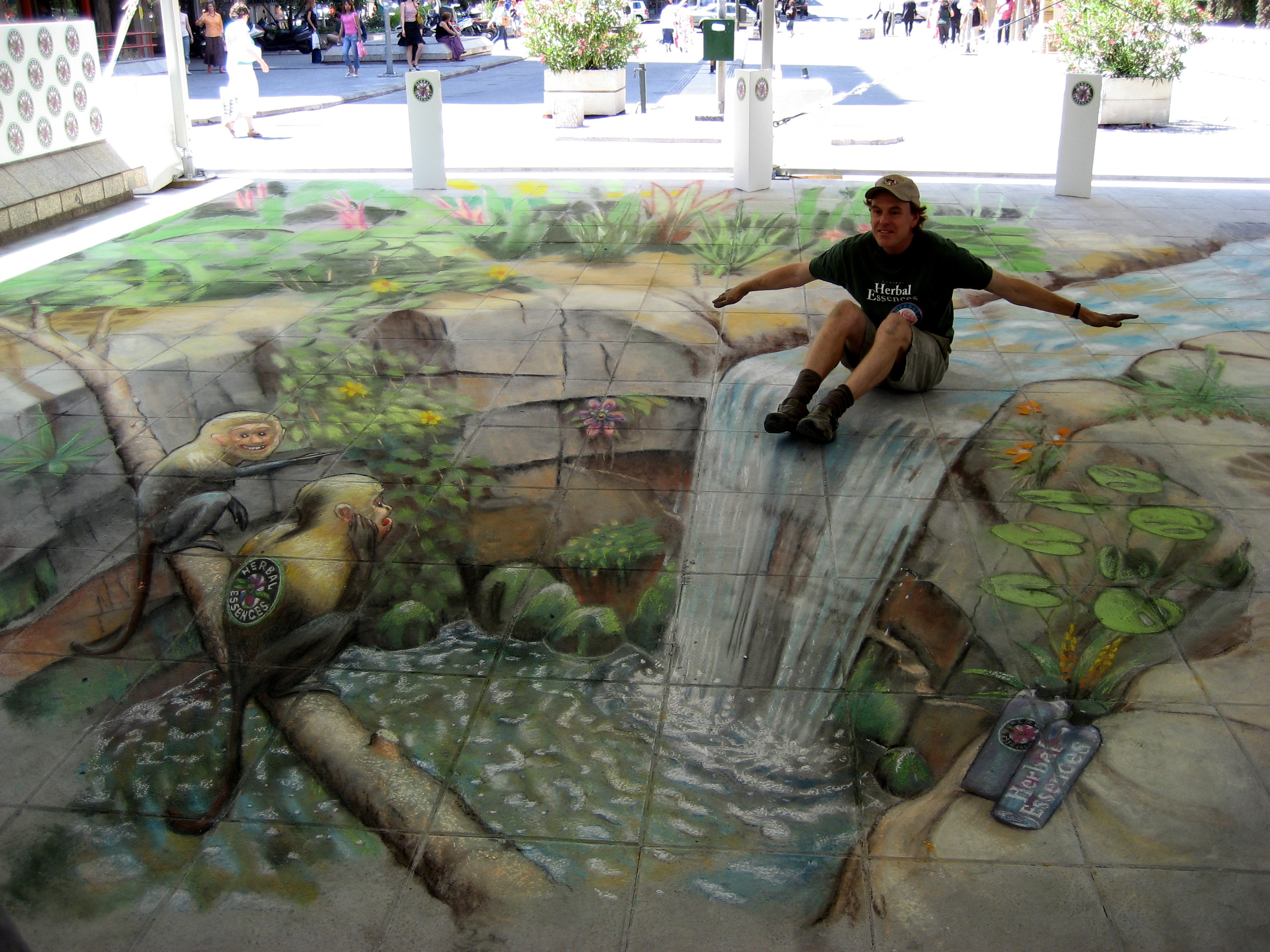
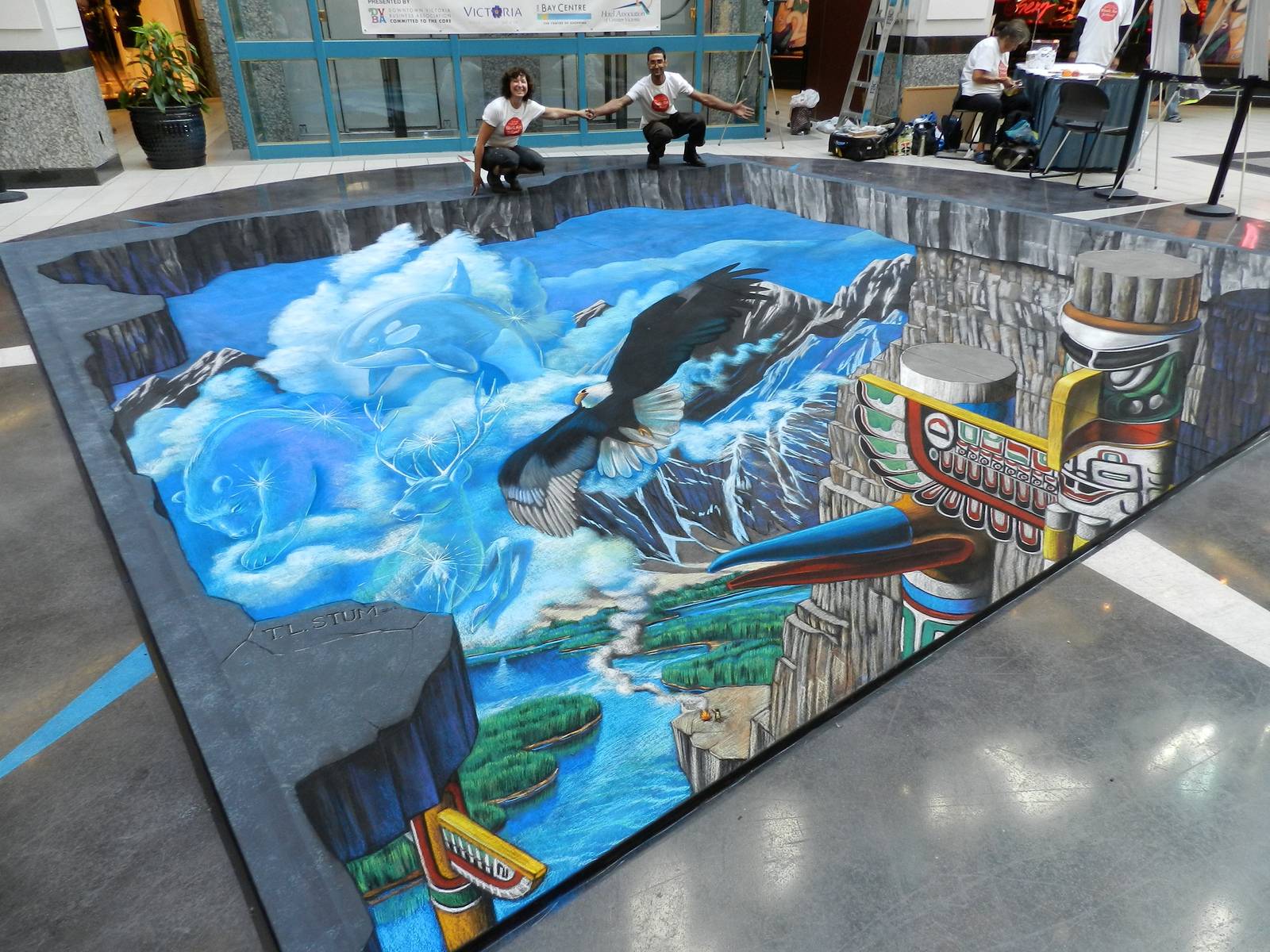
Tracy Lee Stum
Not only is Tracy one of the few female artists to choose this medium, she’s also the only one to begin making 4D augmented reality paintings that add new depth and challenge to our perception. Her education and resume are impressive, as she’s served as a cultural ambassador and was honored by The Guinness World Record for making the largest street painting by an individual. She’s curated the first annual DO/AC 3D Chalk Festival, and creates works that are passionate, inspiring, relevant, and manages to meld art and commerce seamlessly by making corporate pieces that are no less arresting than her independent work.
Plus, she has hair that would make Pam Grier proud.
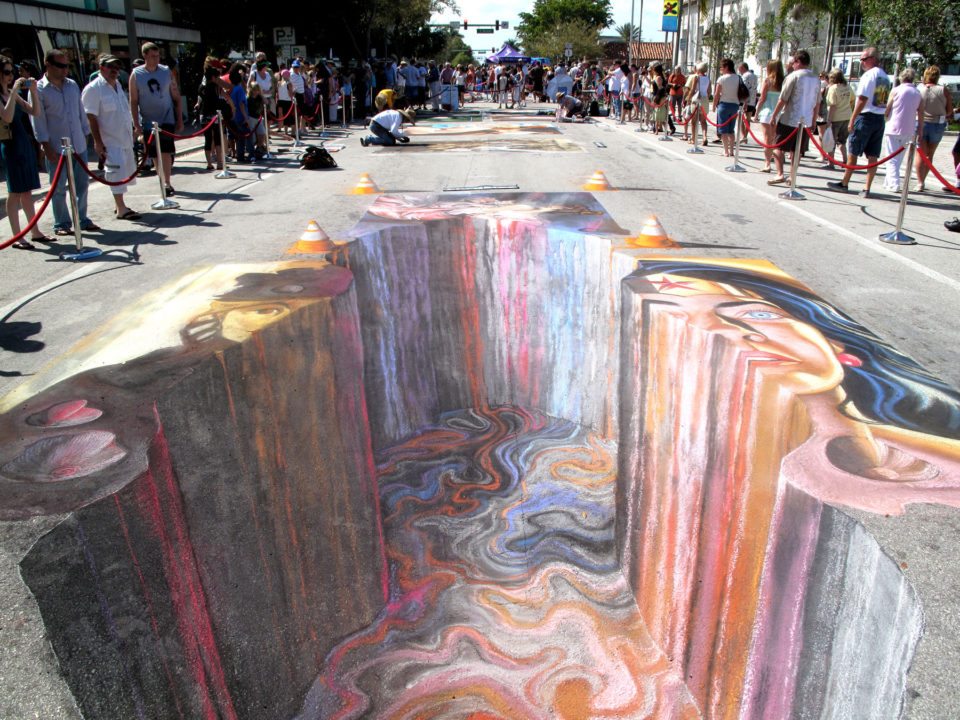
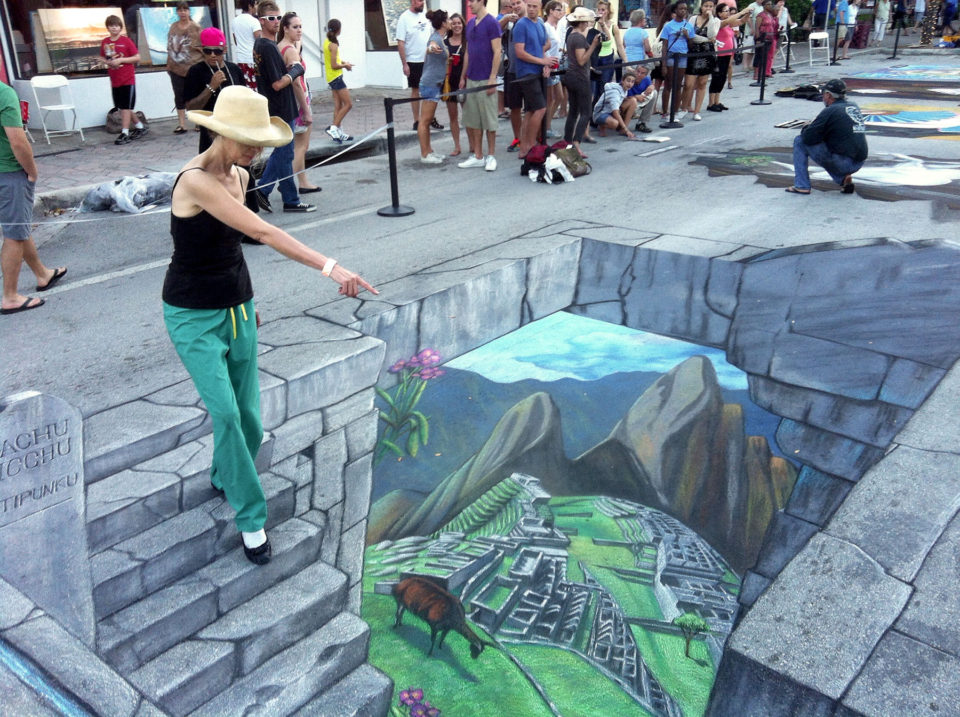
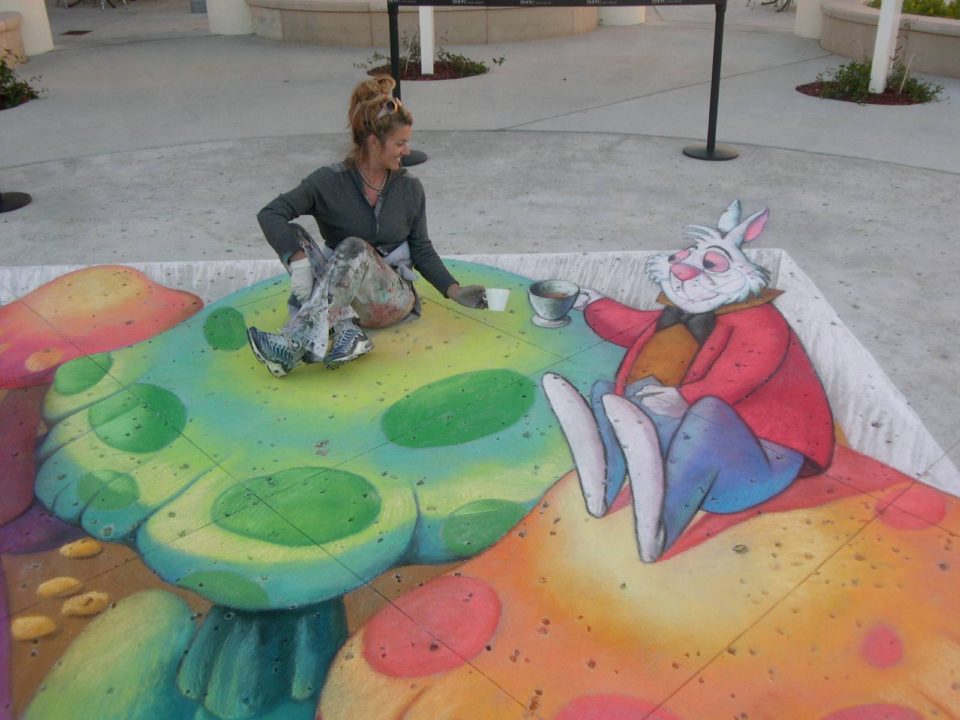
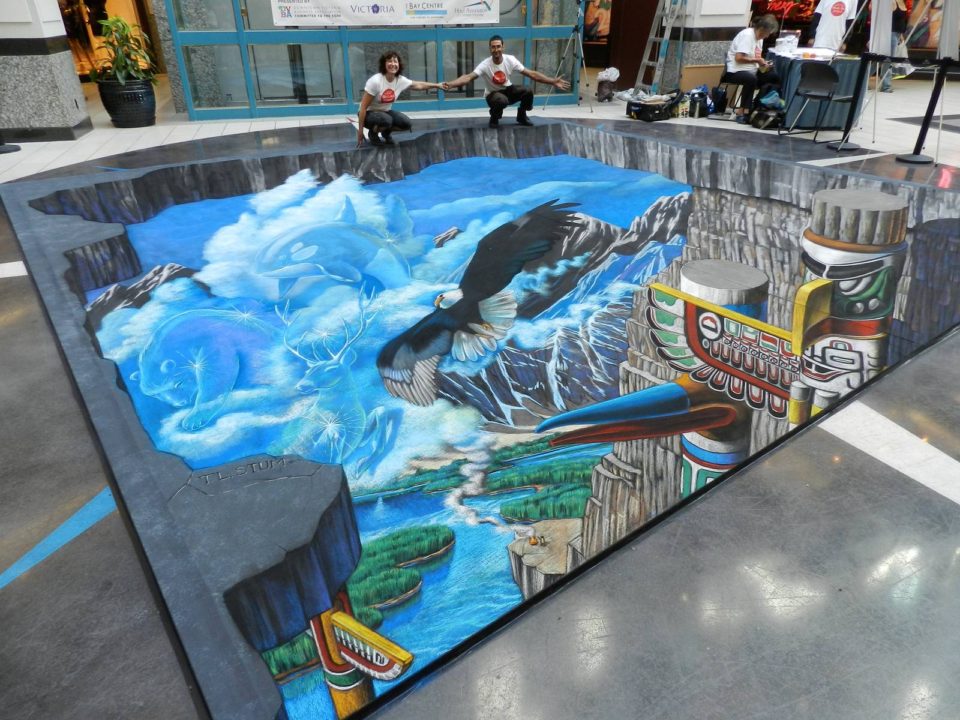
View in gallery View in gallery View in gallery View in gallery
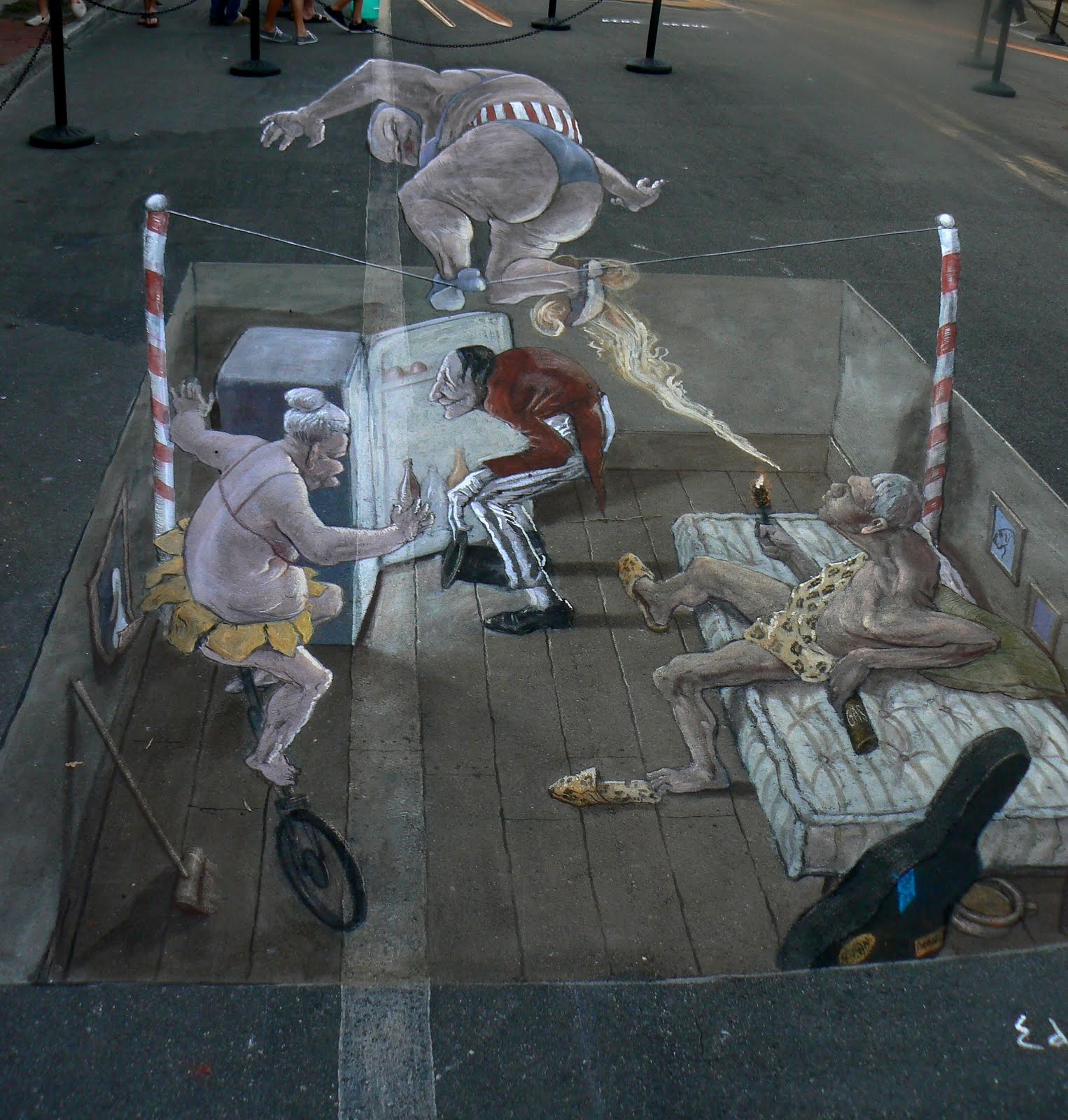
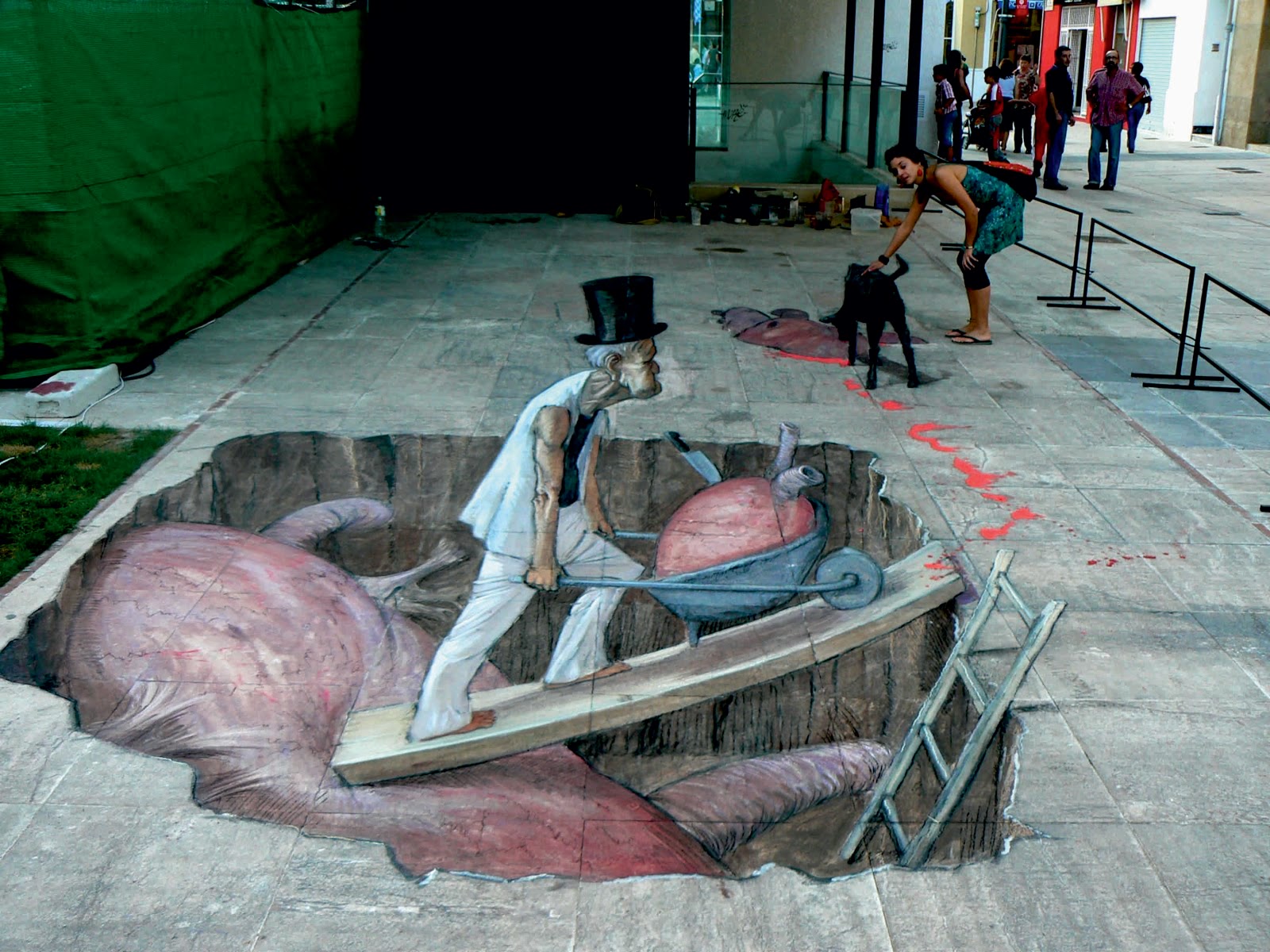
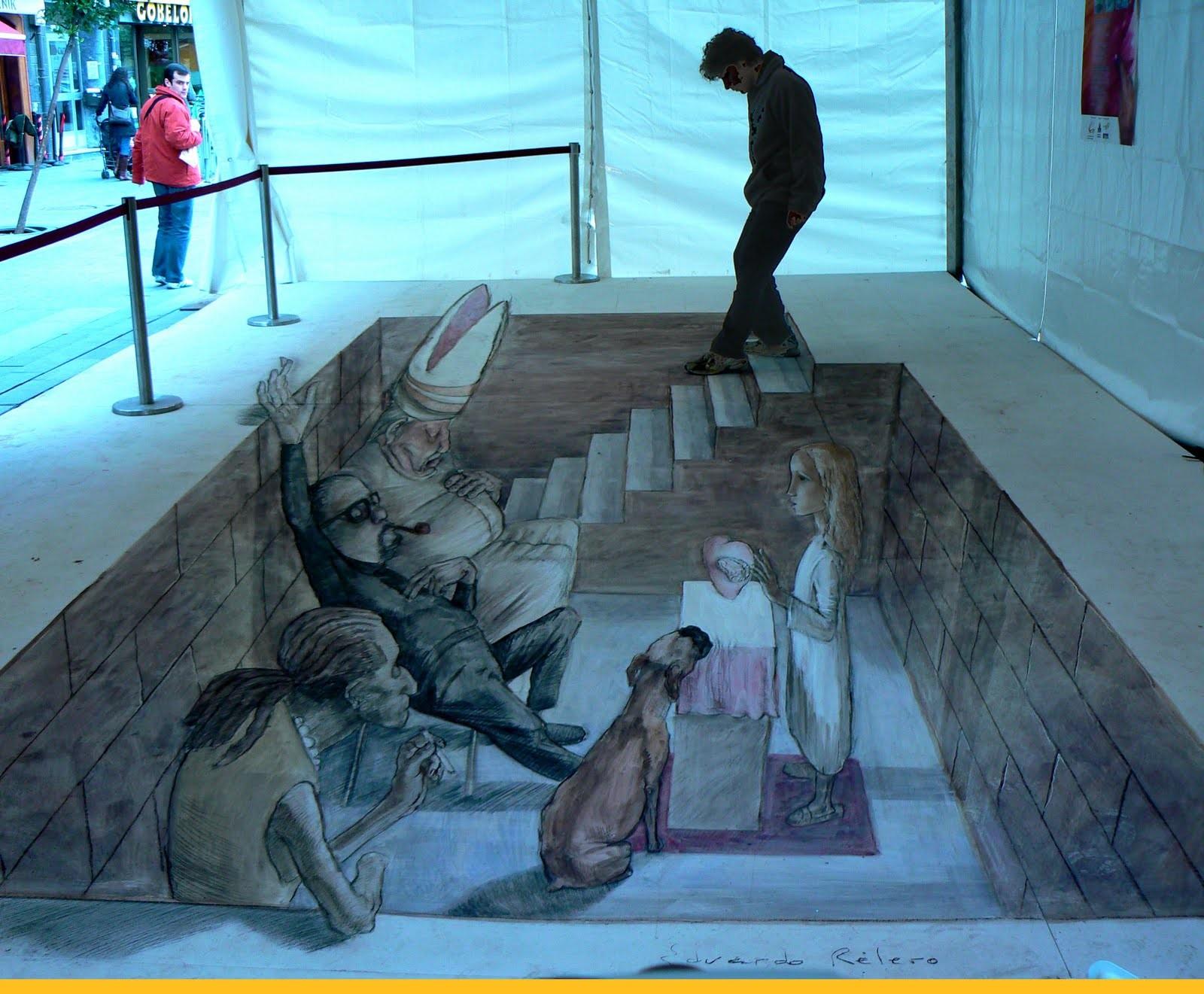
Eduardo Rolero
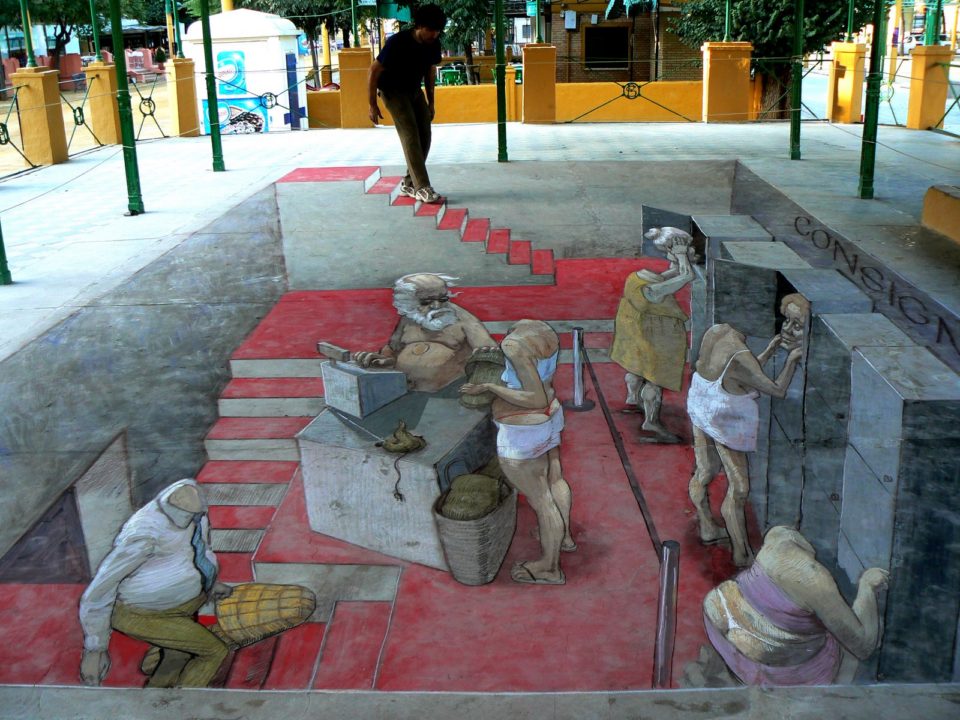
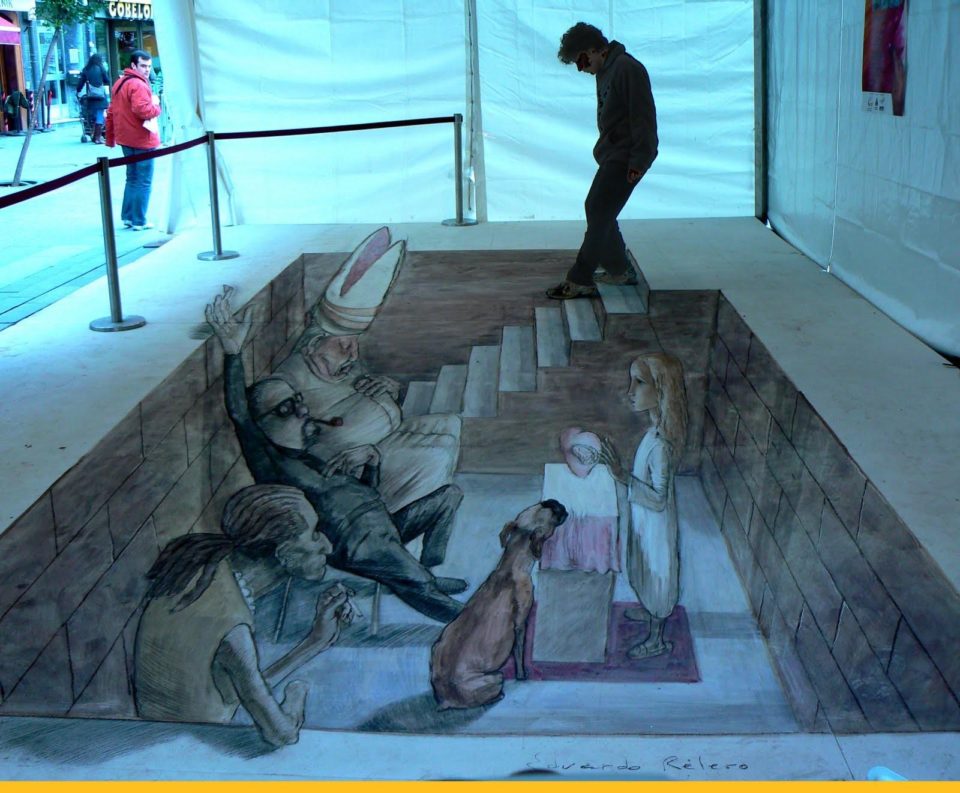
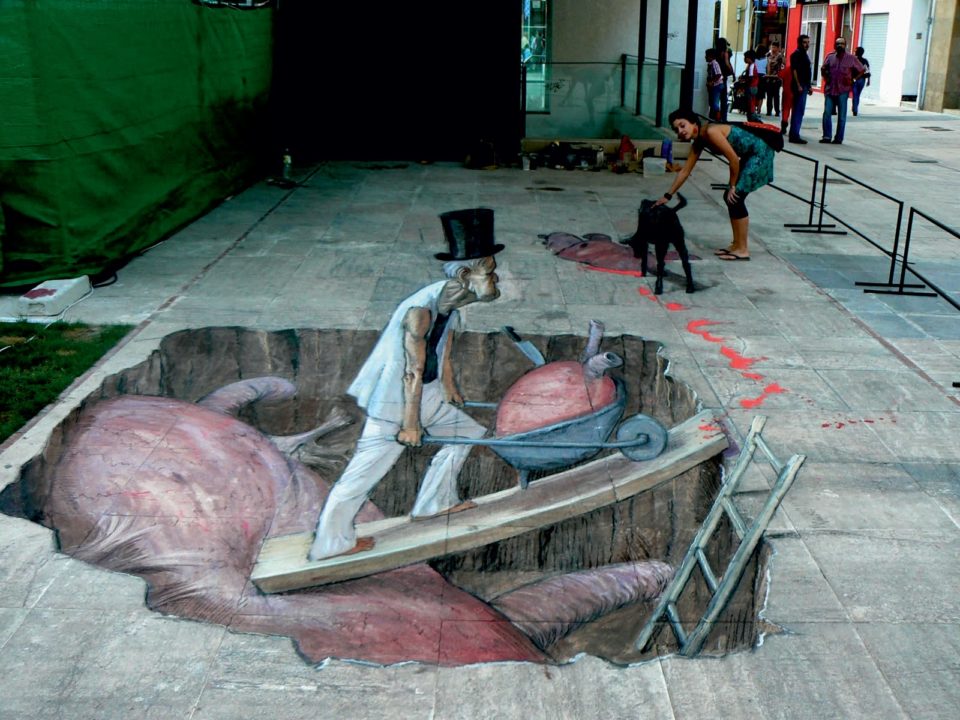
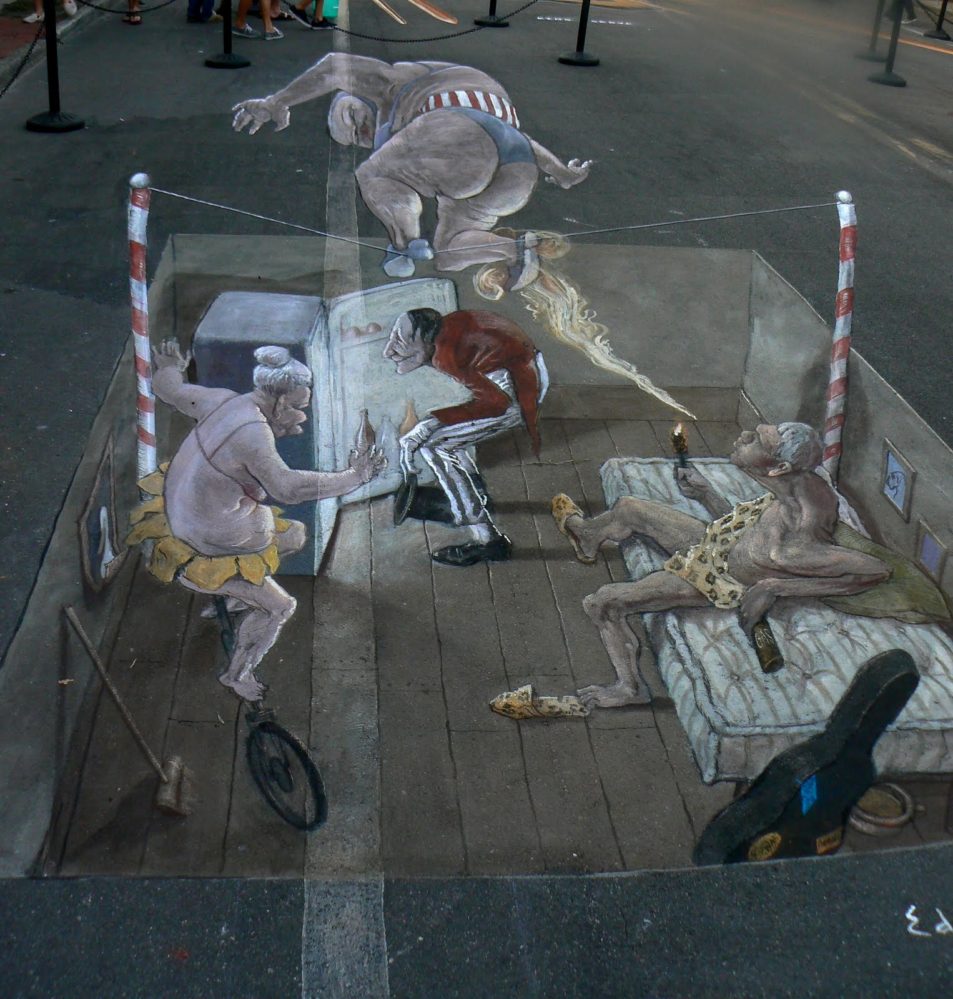
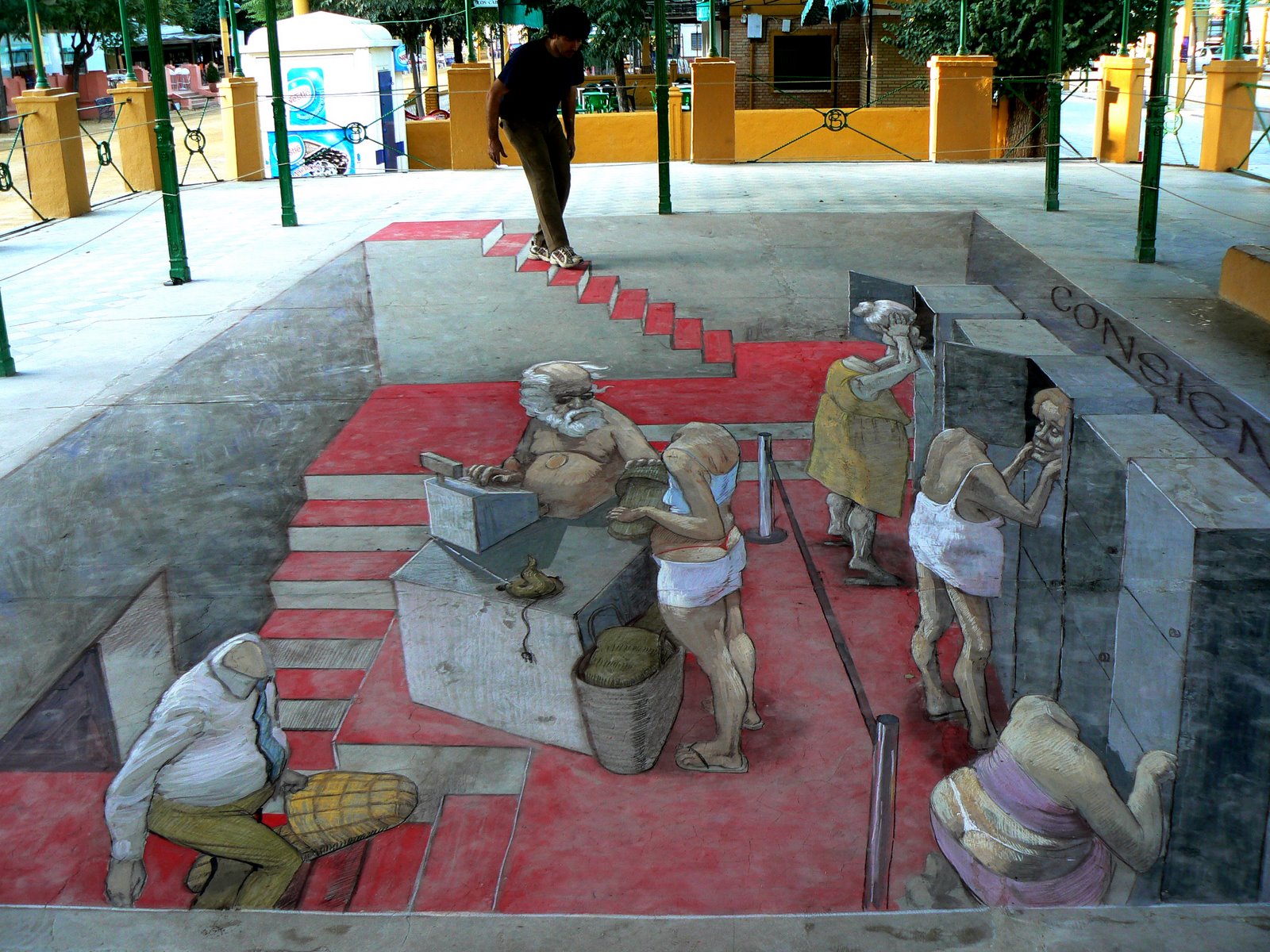
Enigmatic and prolific, Rolero is largely considered the Salvador Dali of the 3D sidewalk art world. His pieces range from outright hysterical, to darkly satirical, to utterly macabre. The work stands alone, but many pieces are built specifically to allow interaction with individuals, adding a playful interactivity that is often secondary in works of this type.
Originally from Argentina but currently living in Spain, Rolero is as private as his works are public, often shunning the public eye.
View in gallery View in gallery View in gallery View in gallery
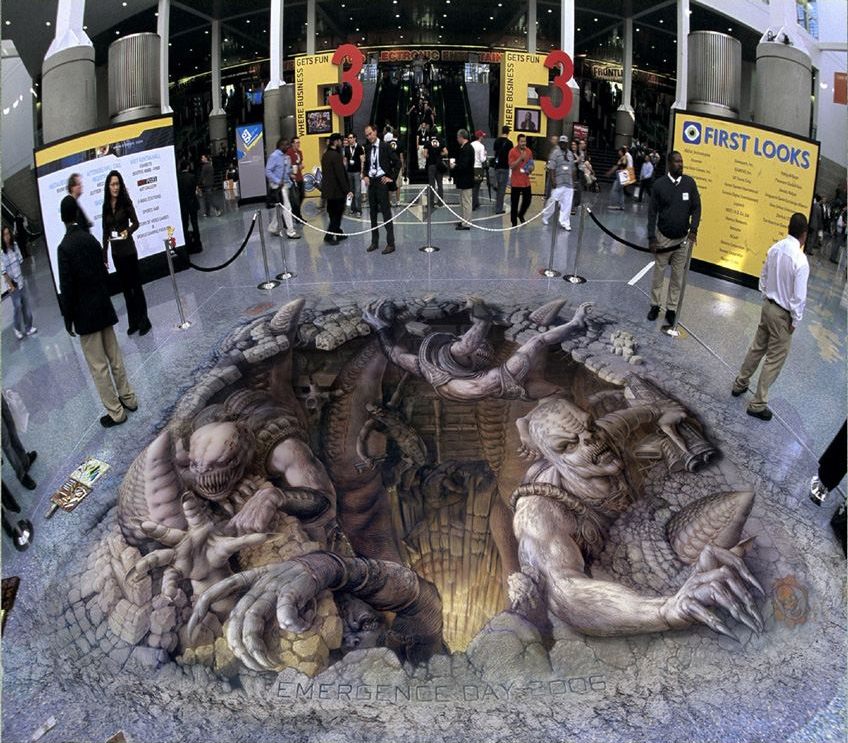
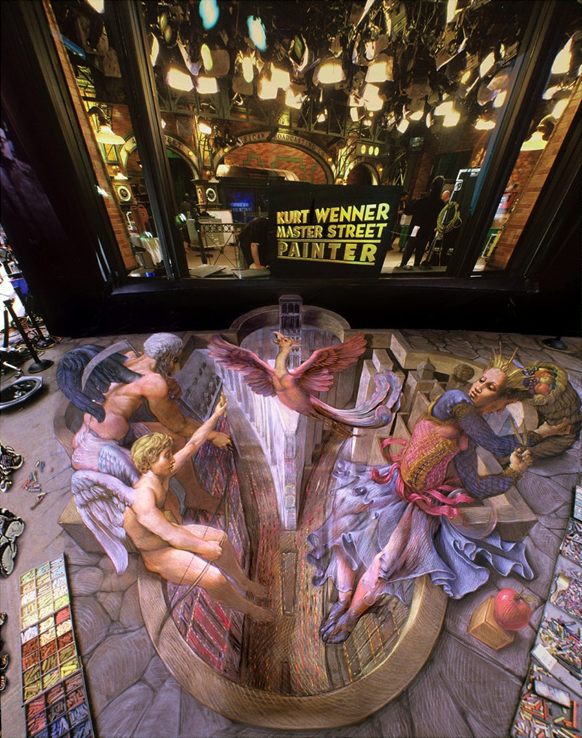
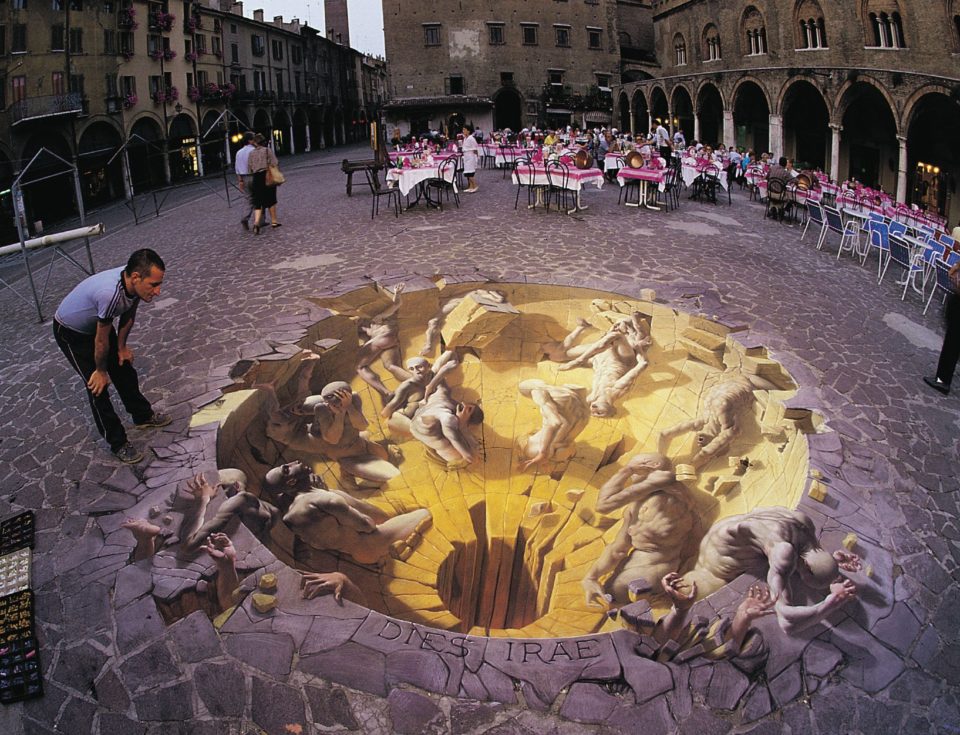
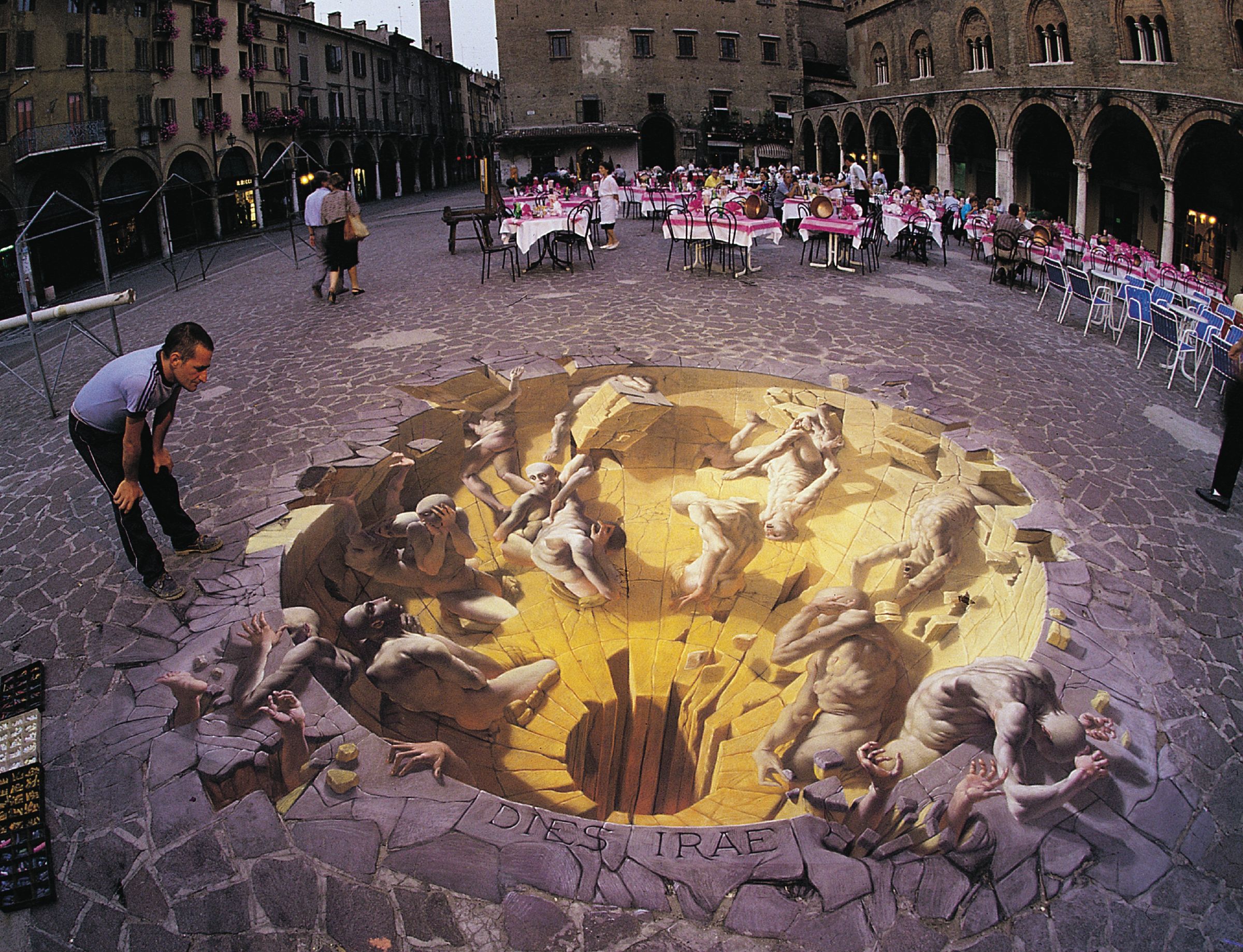
Kurt Wenner
Wenner doesn’t lack for confidence, with a blog that declares him the “inventory of 3D pavement art.” While that title is quaint, if inaccurate, he certainly has a style that defines the medium. Kurt uses a lot of classical styles, borrowing heavily from every era and spanning multiple genres, with inspiration both contemporary and traditional.
Sometimes scathing, sometimes gently humorous, his representations of both the real and the fanciful run the gamut. He clearly draws much of his influence from Renaissance paintings, often honoring them in style, if not content.
View in gallery View in gallery View in gallery
View in gallery
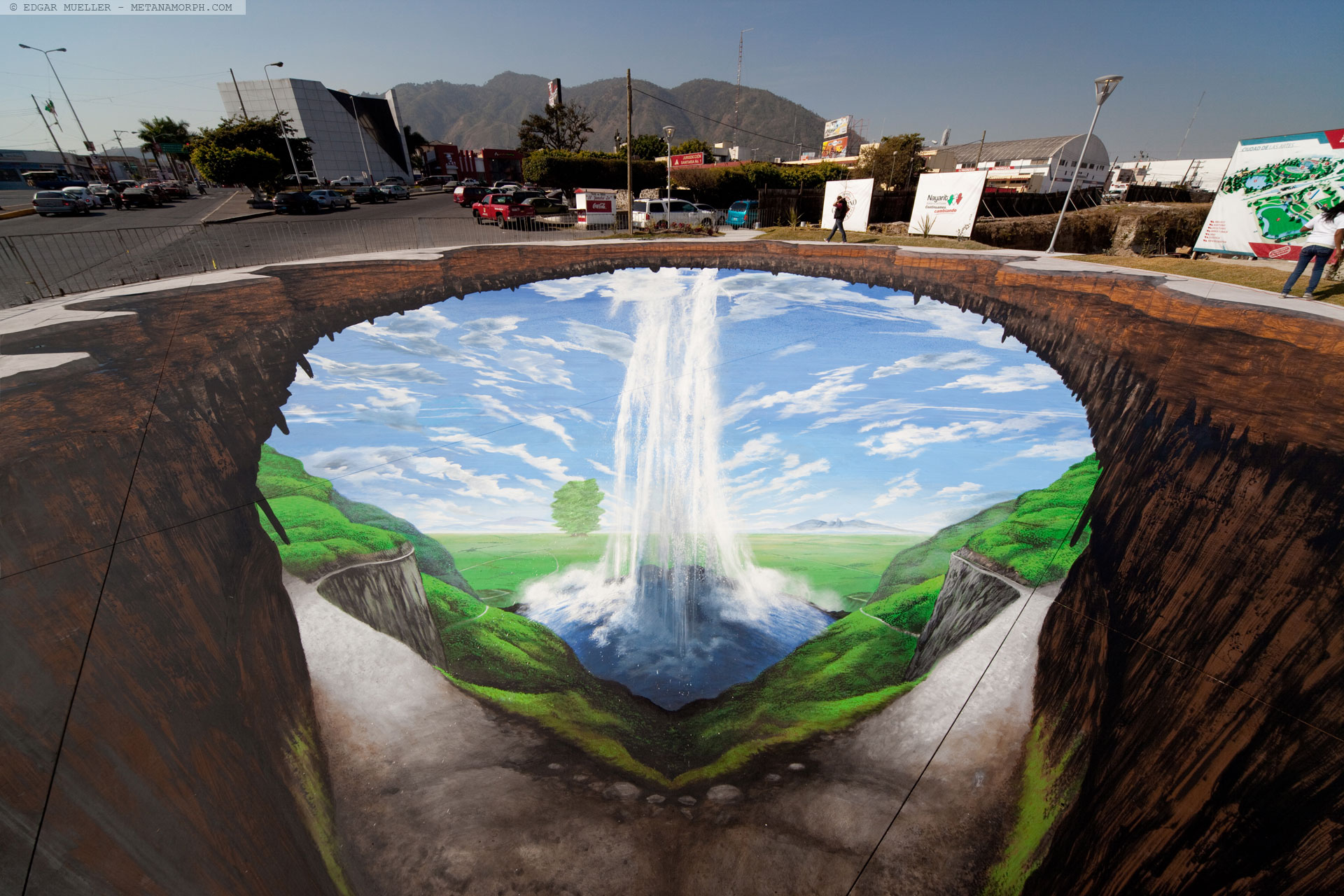
Edgar Müller
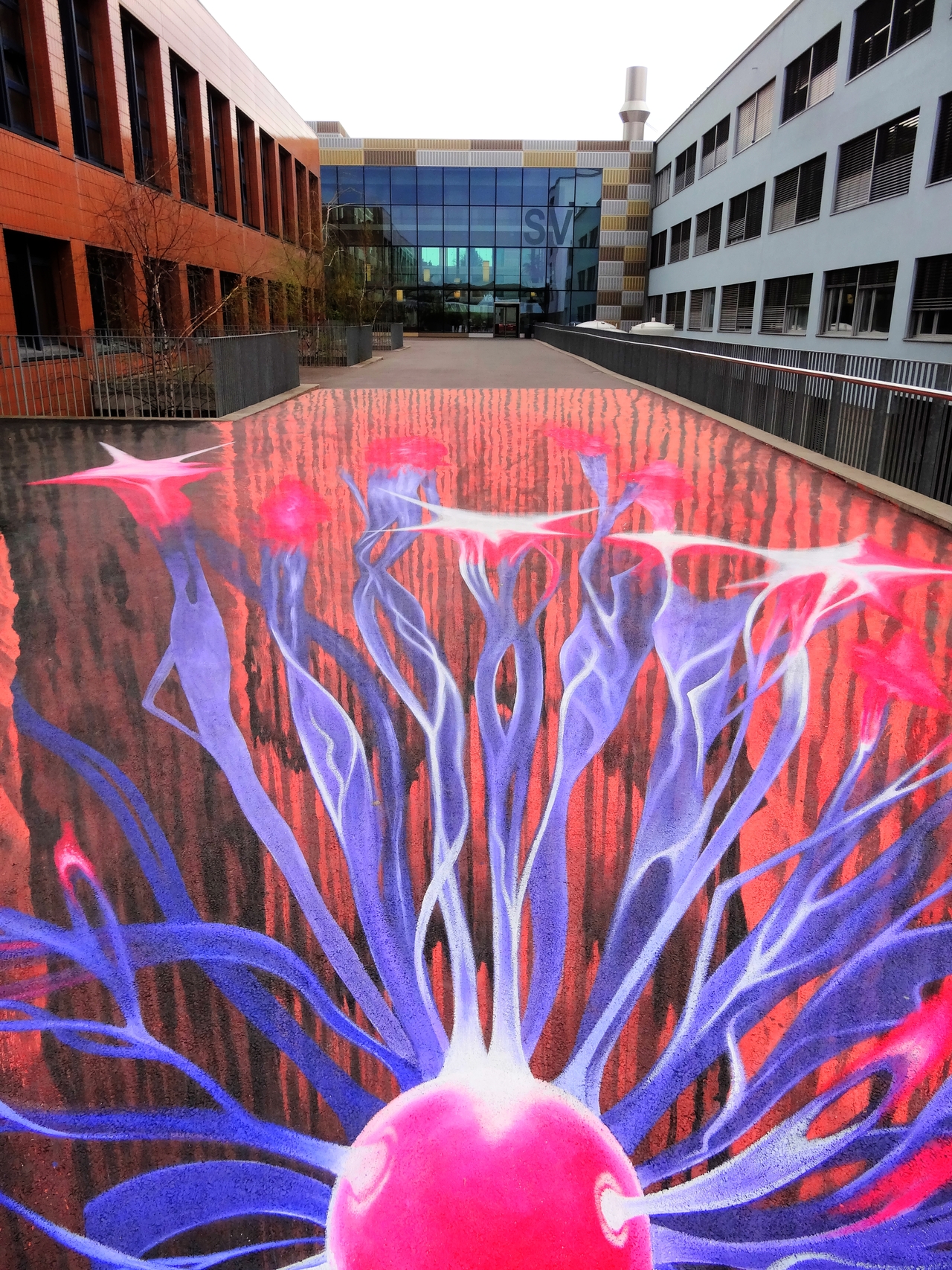
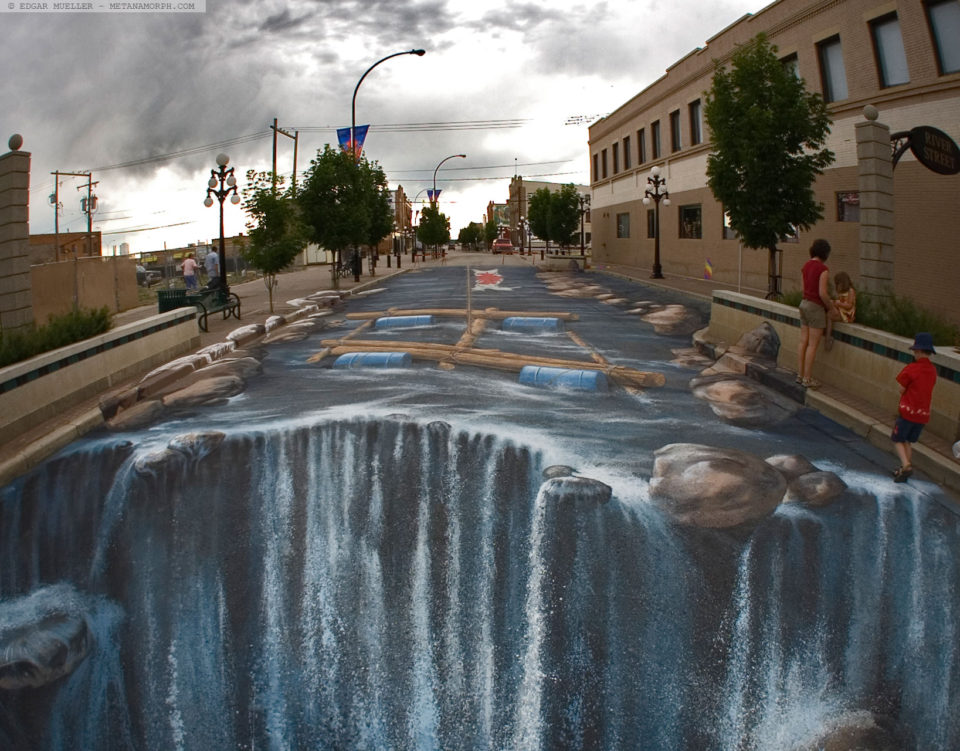
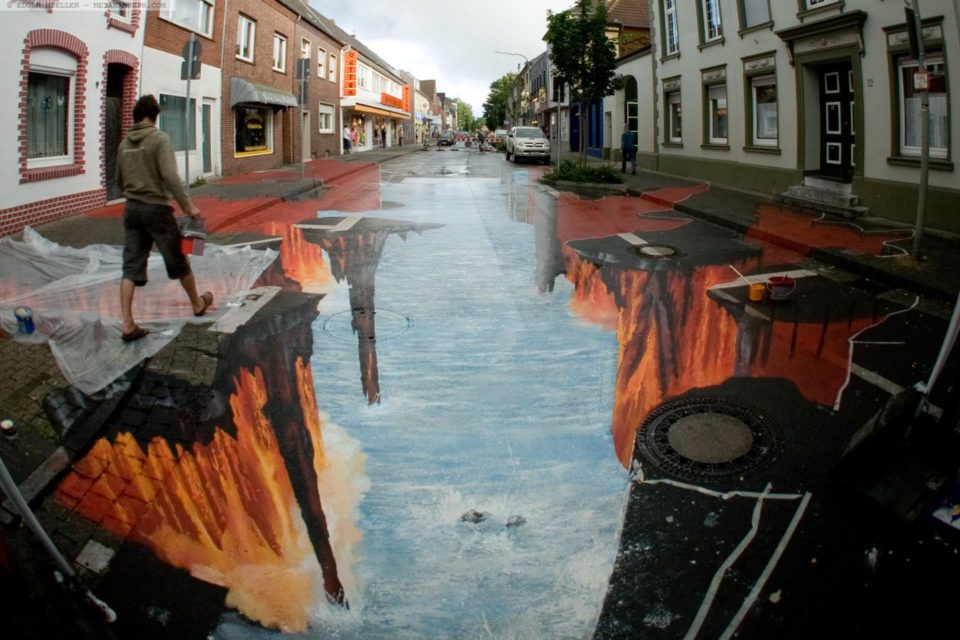
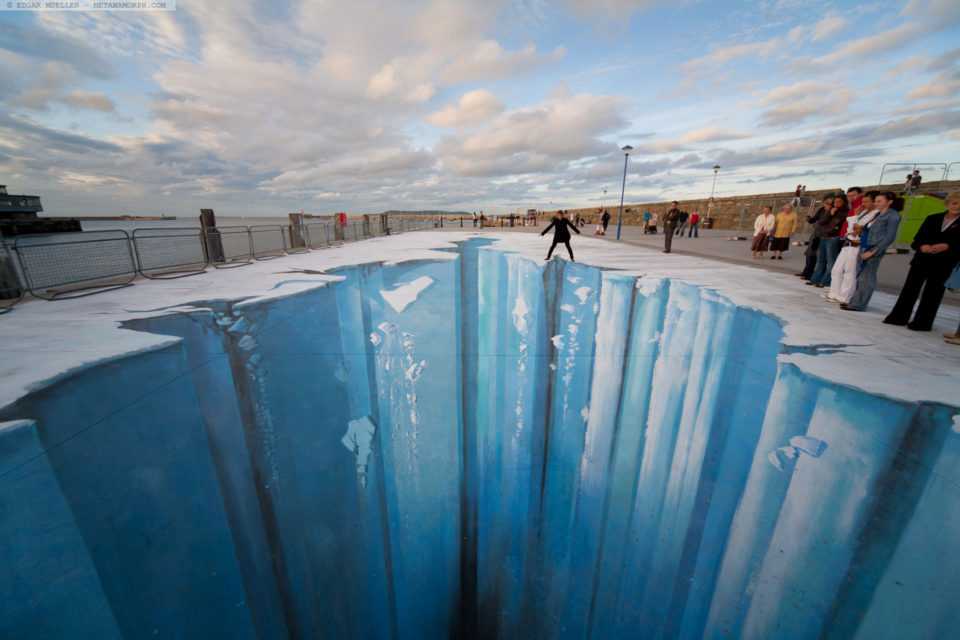
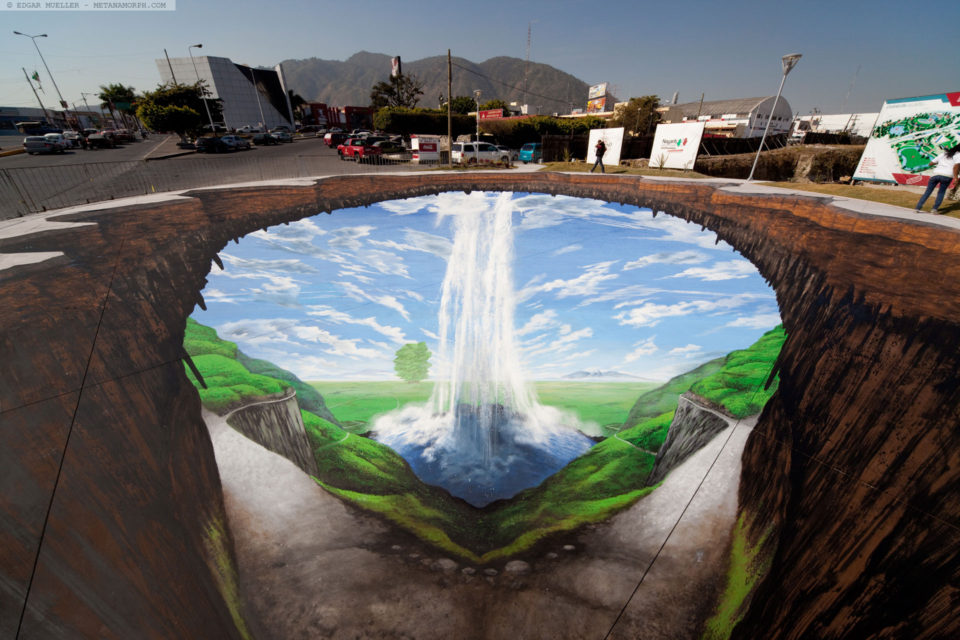
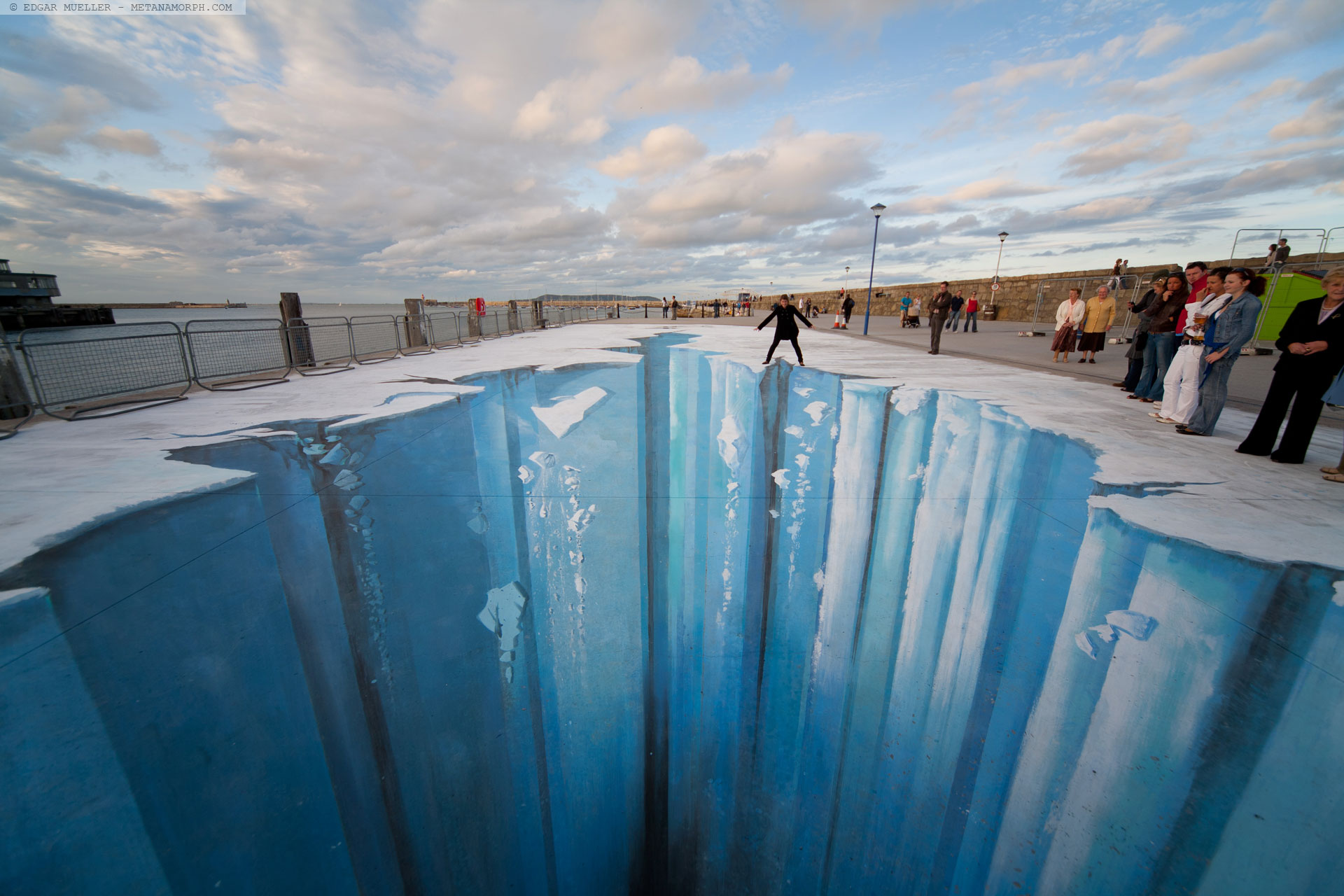
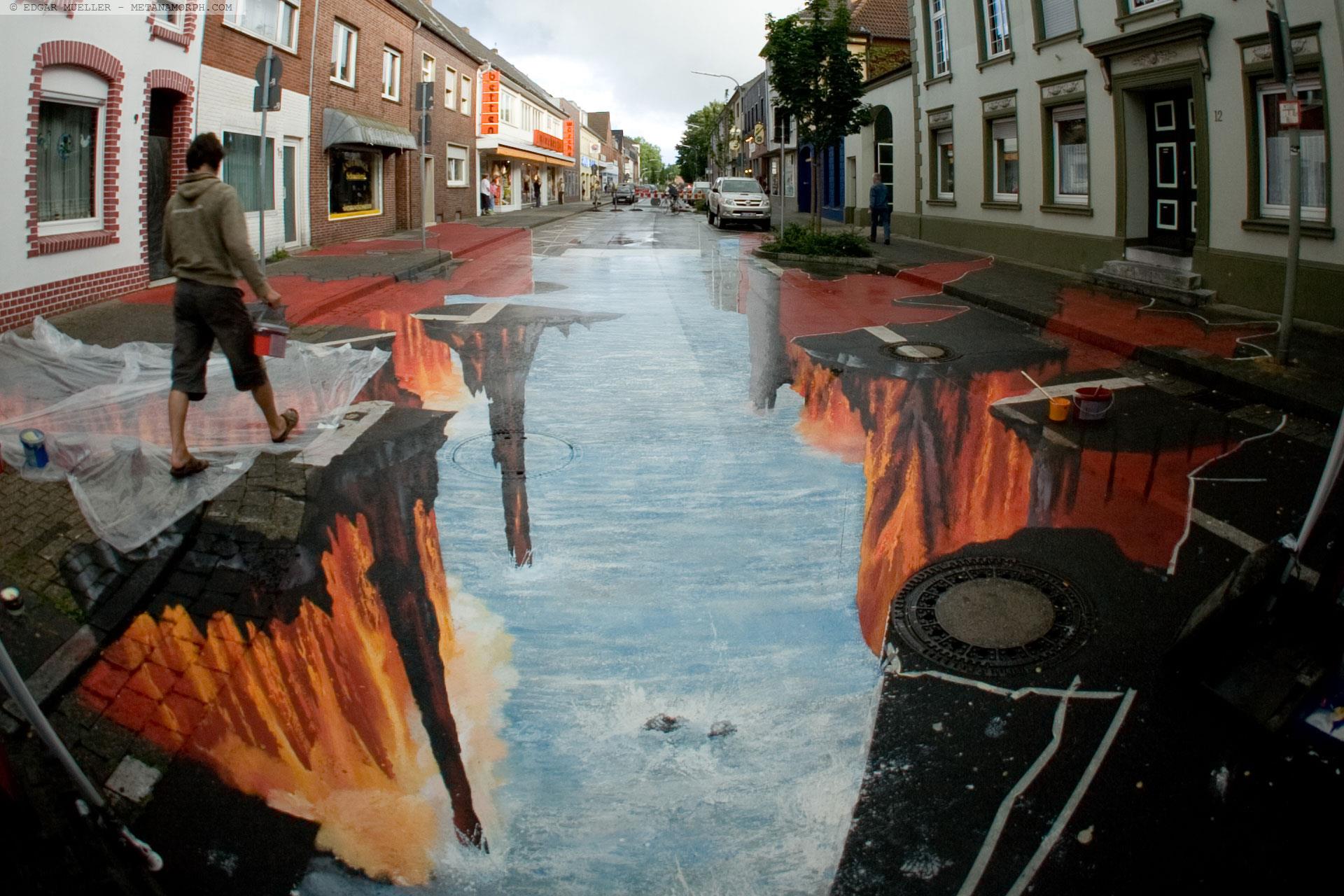
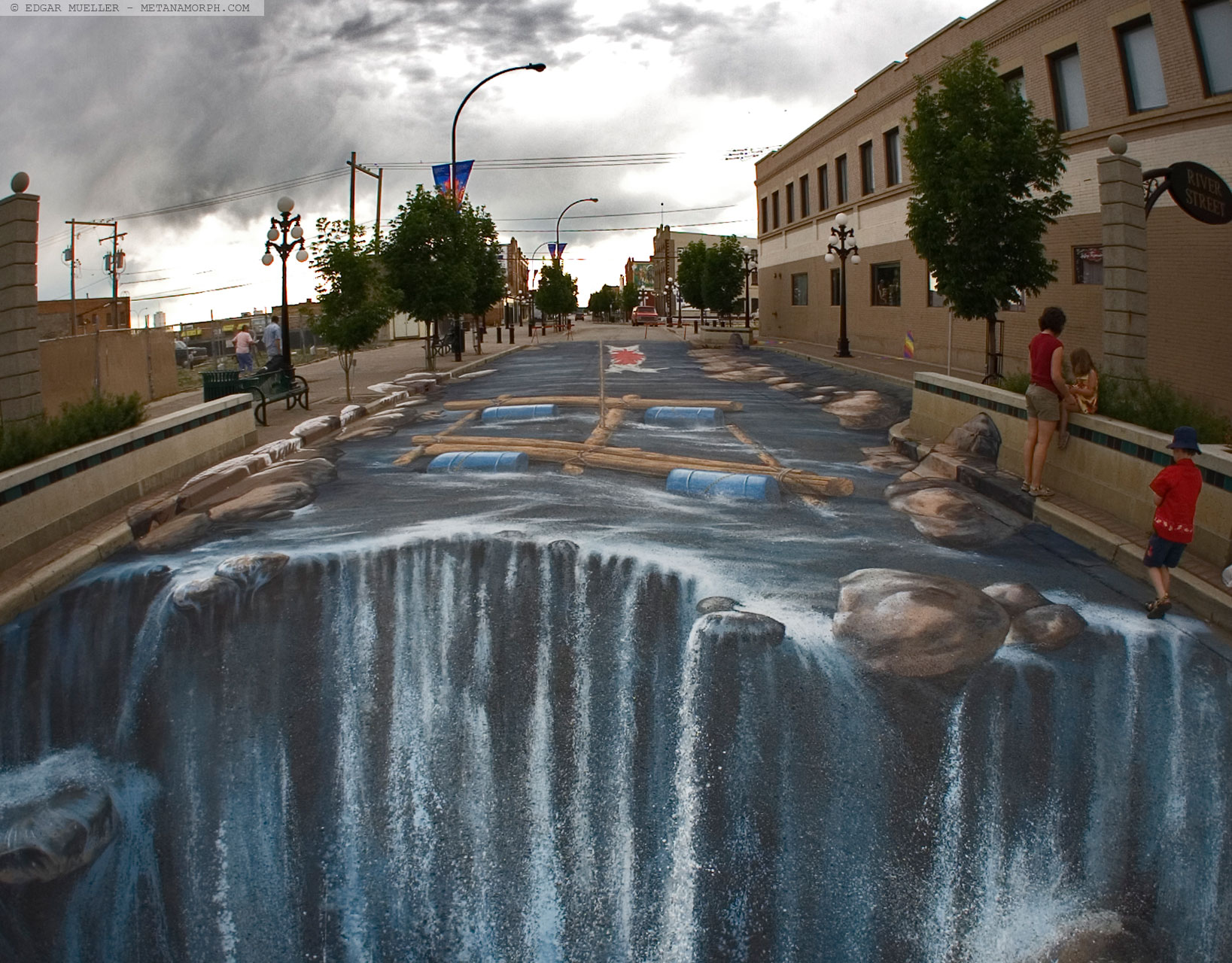
While German engineering is known the world over, German artwork tends to fall largely by the wayside. Müller comes from the bucolic town of Straelen where he began capturing the pastoral wonder around him in art. At 16, he found a calling for street art and has been making it ever since.
Müller is probably the best known of all 3D sidewalk artists, as even those who have never heard the name have likely seen some of his strikingly large, and incredibly engaging pieces online. The social media world is riddled with people posing over his breathtaking landscapes, which invite posing and give lots of opportunity for humor as much as “wish you were here” showboating.
View in gallery View in gallery View in gallery View in gallery
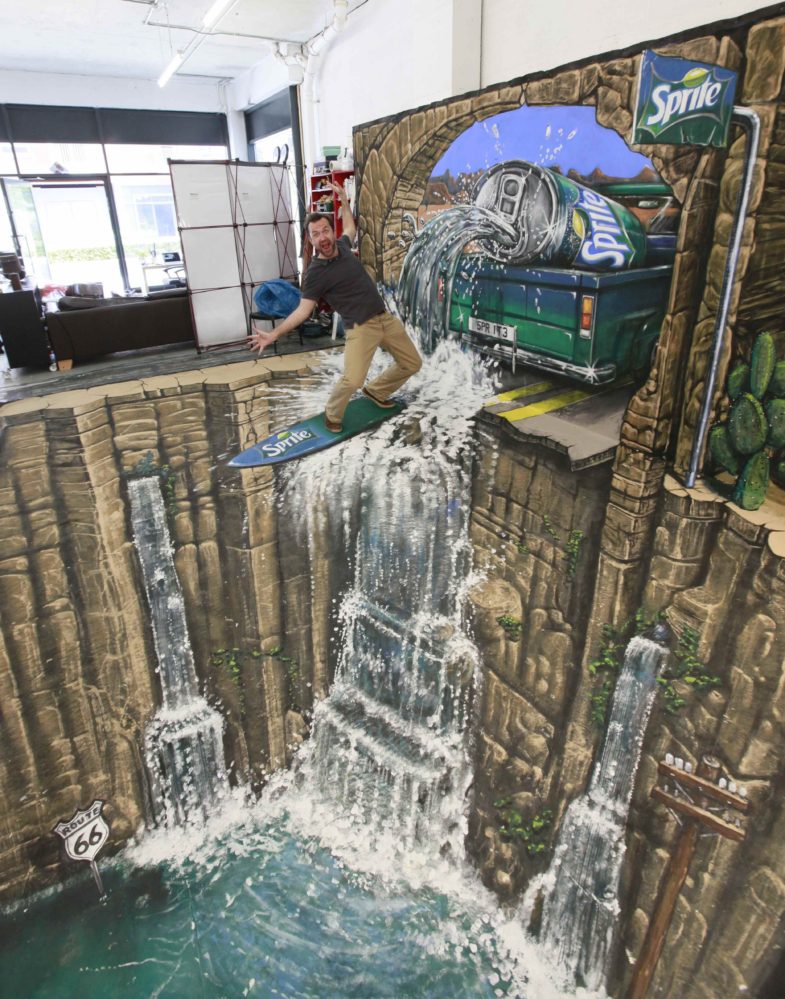
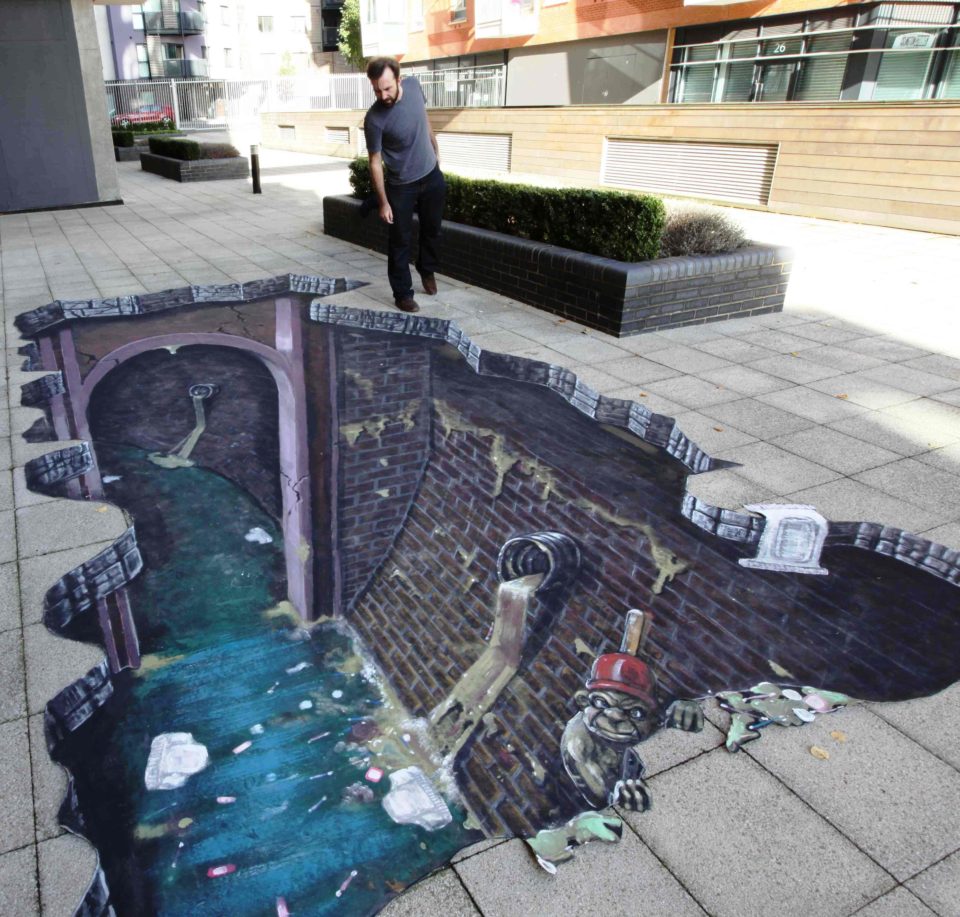
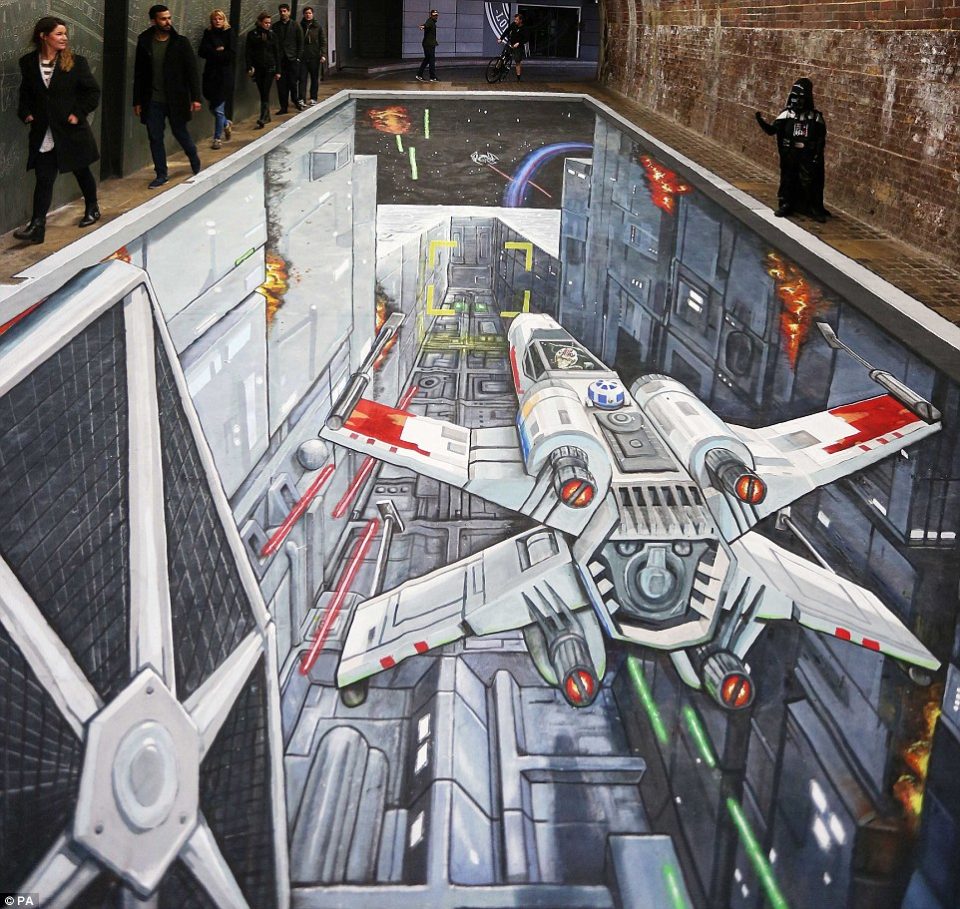
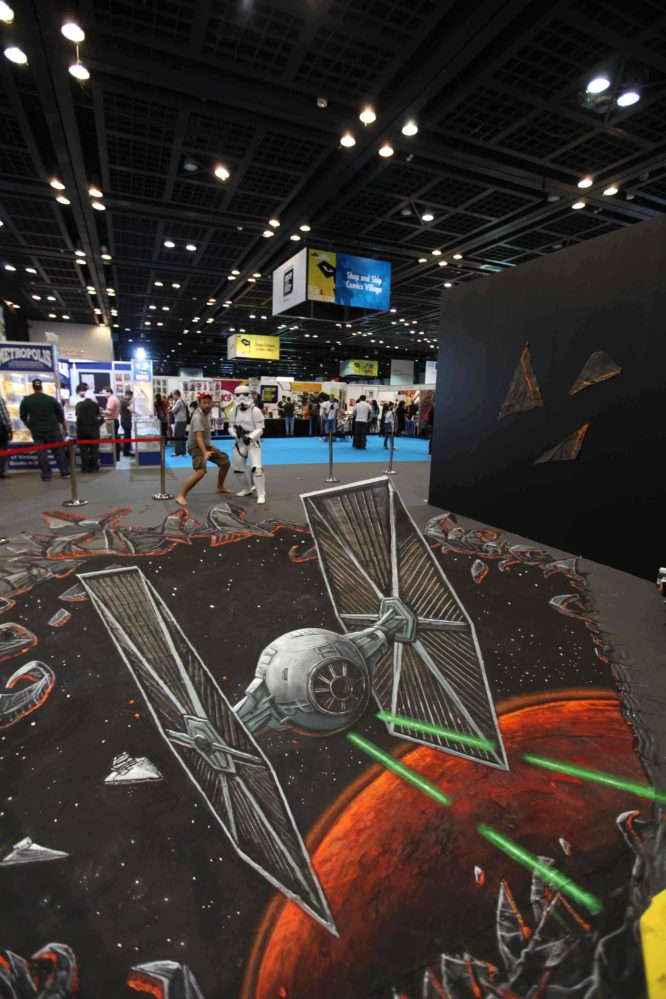
Joe Hill
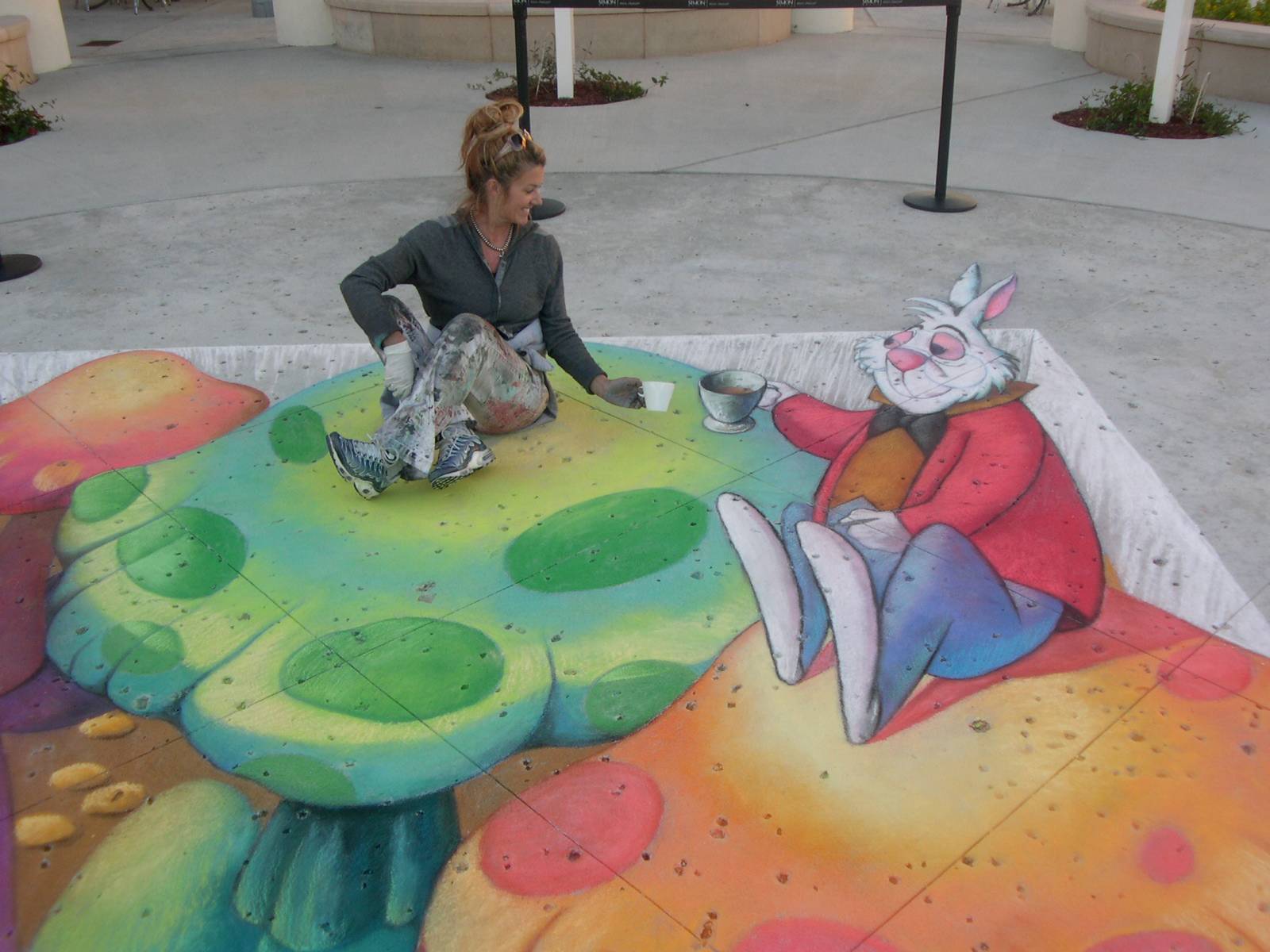
Poppy, modern, and fun, Joe Hill’s portfolio is rife with engaging pieces that have an almost cartoon quality to them, like a child begging you to play. His work pops in and out of the sidewalk, wall, floor, or ceiling in a way that invites you to engage with it, and makes you feel like part of the experience.
The accessibility of Joe’s work is, by in large, what makes it good for the most casual fan. Most of his 3D work isn’t intended to be profound, which isn’t to diminish it in the least. Rather than being overburdened with layers, it’s pleasurable for everyone and a nice starting point for younger viewers or those who previously had little interest in visual works.
View in gallery View in gallery View in gallery View in gallery
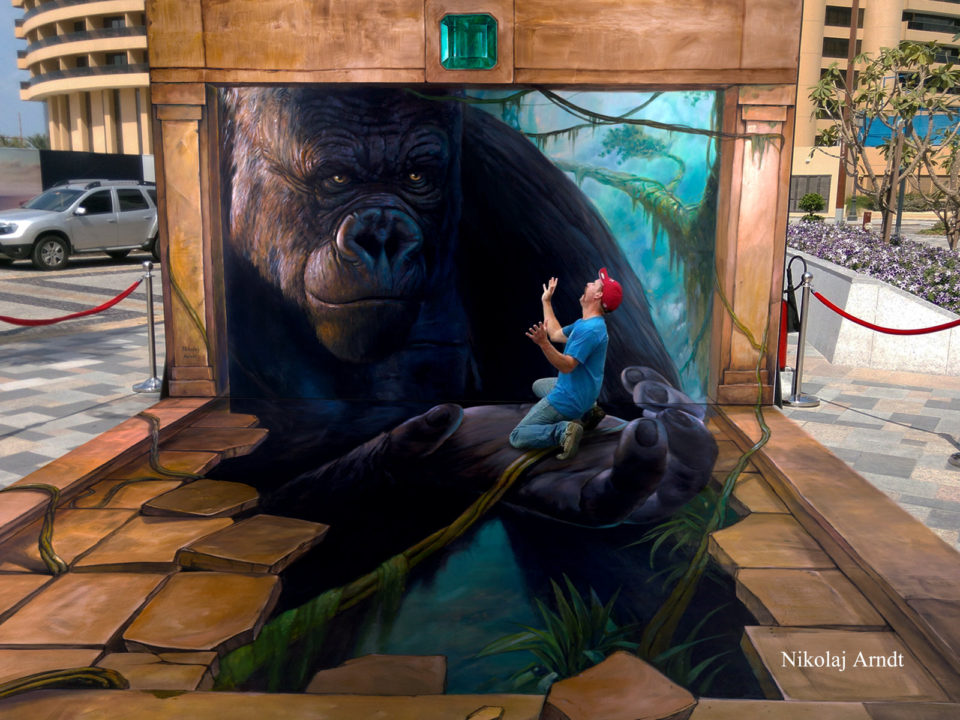
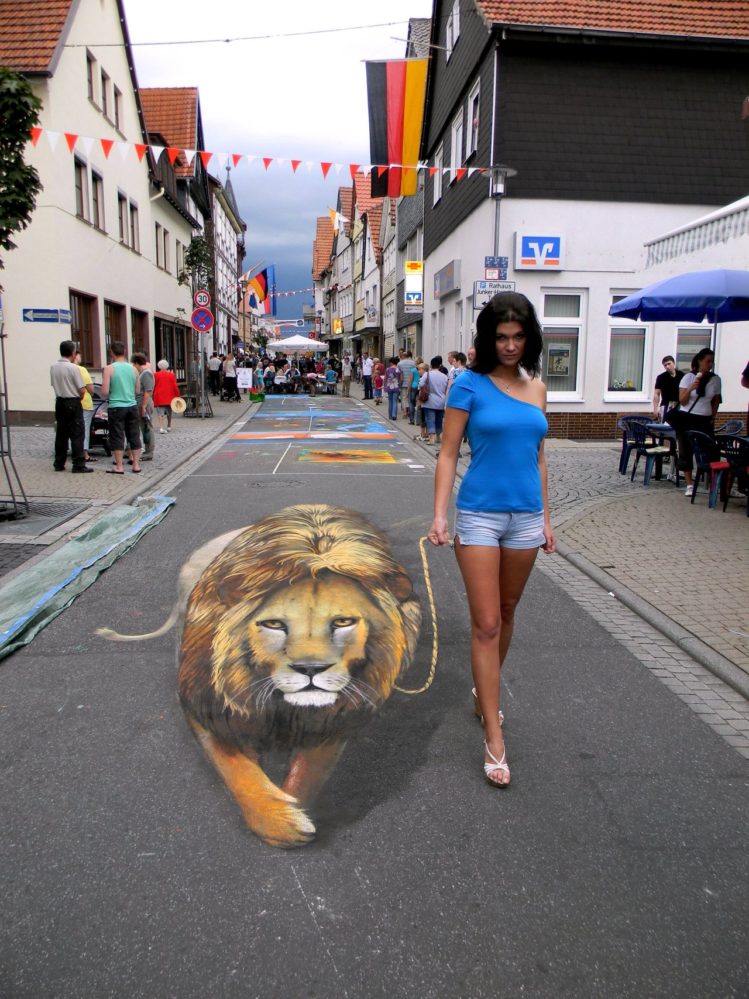
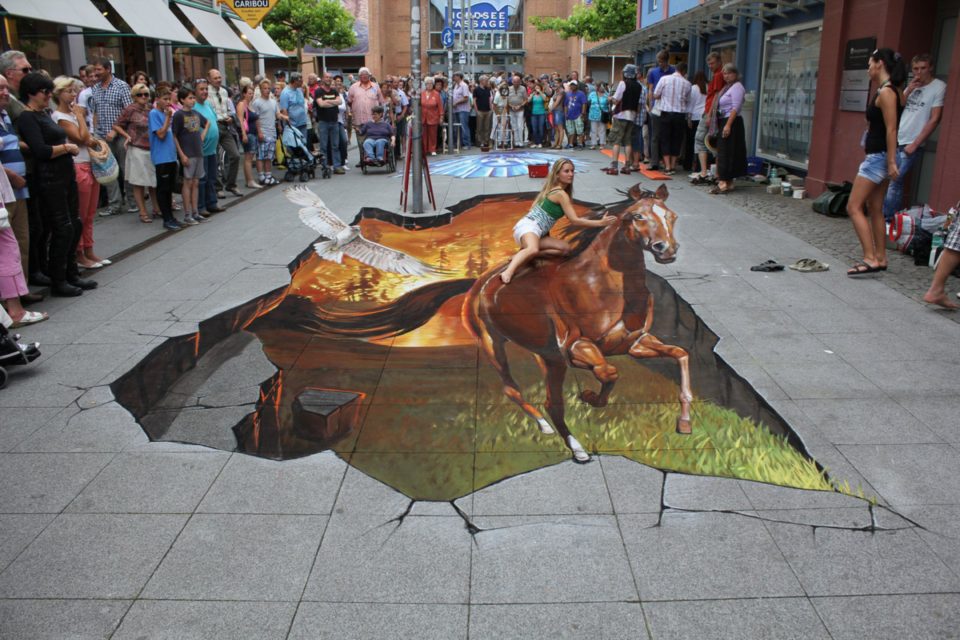
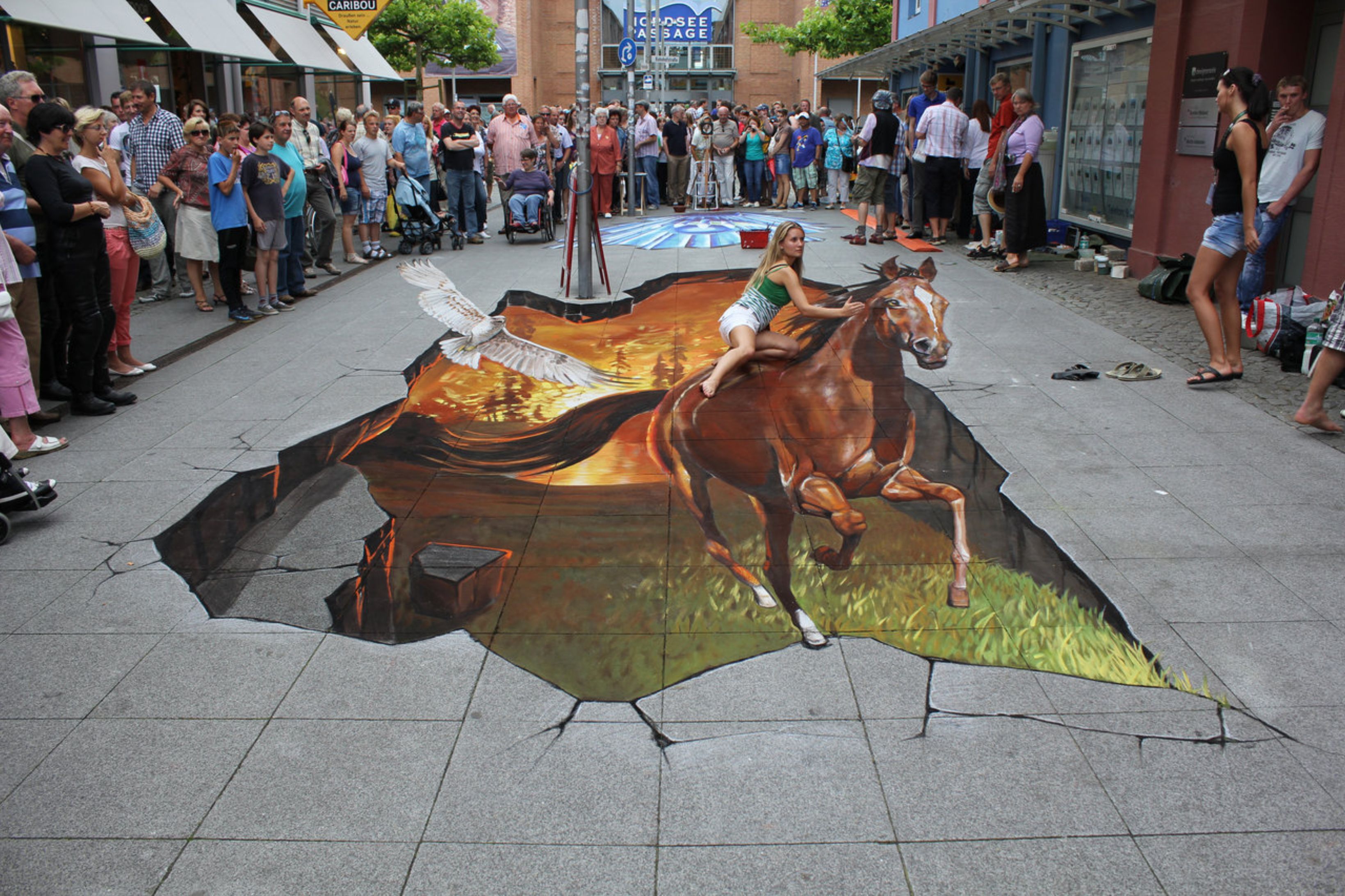
Nikolaj Arndt
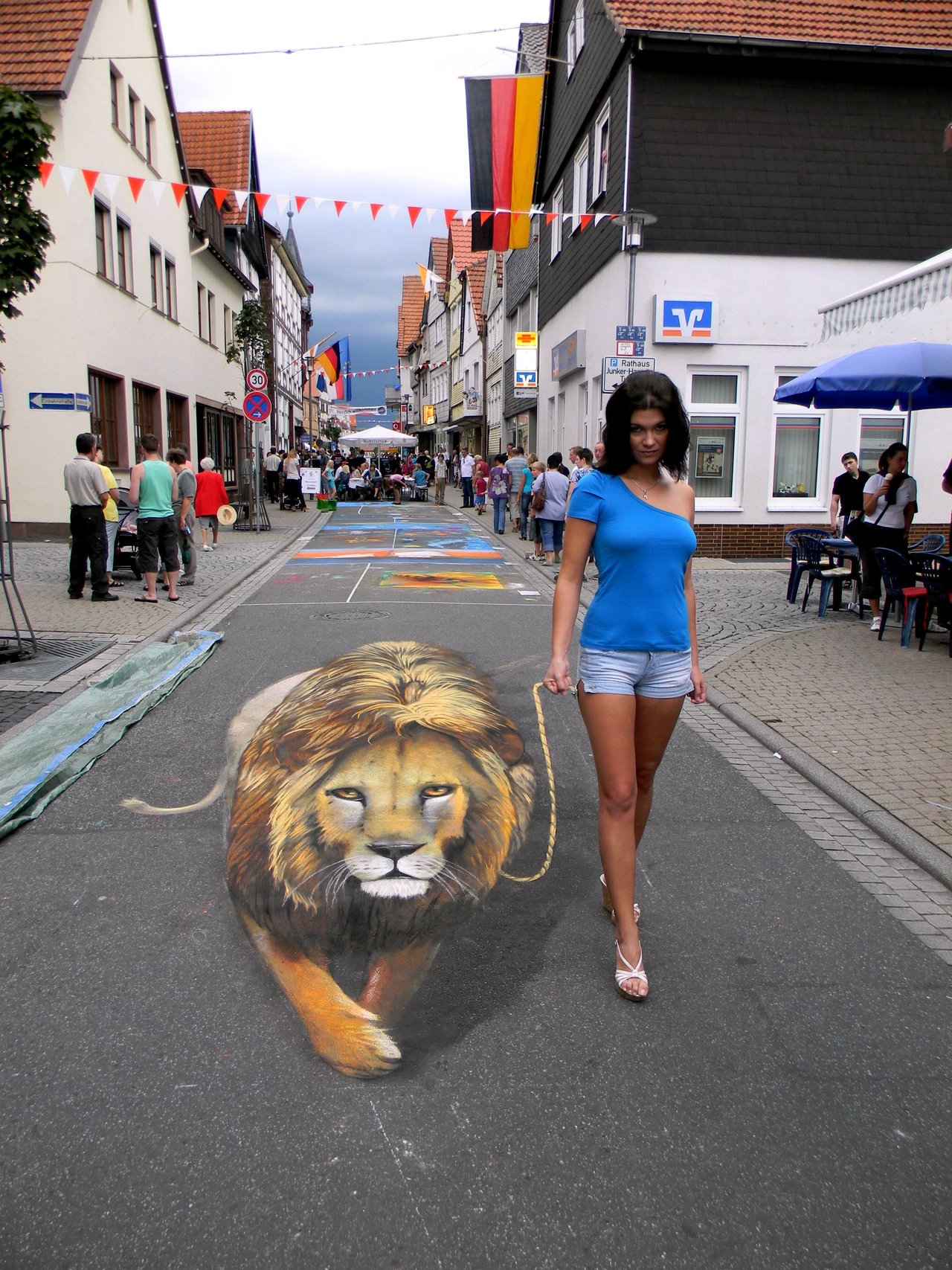
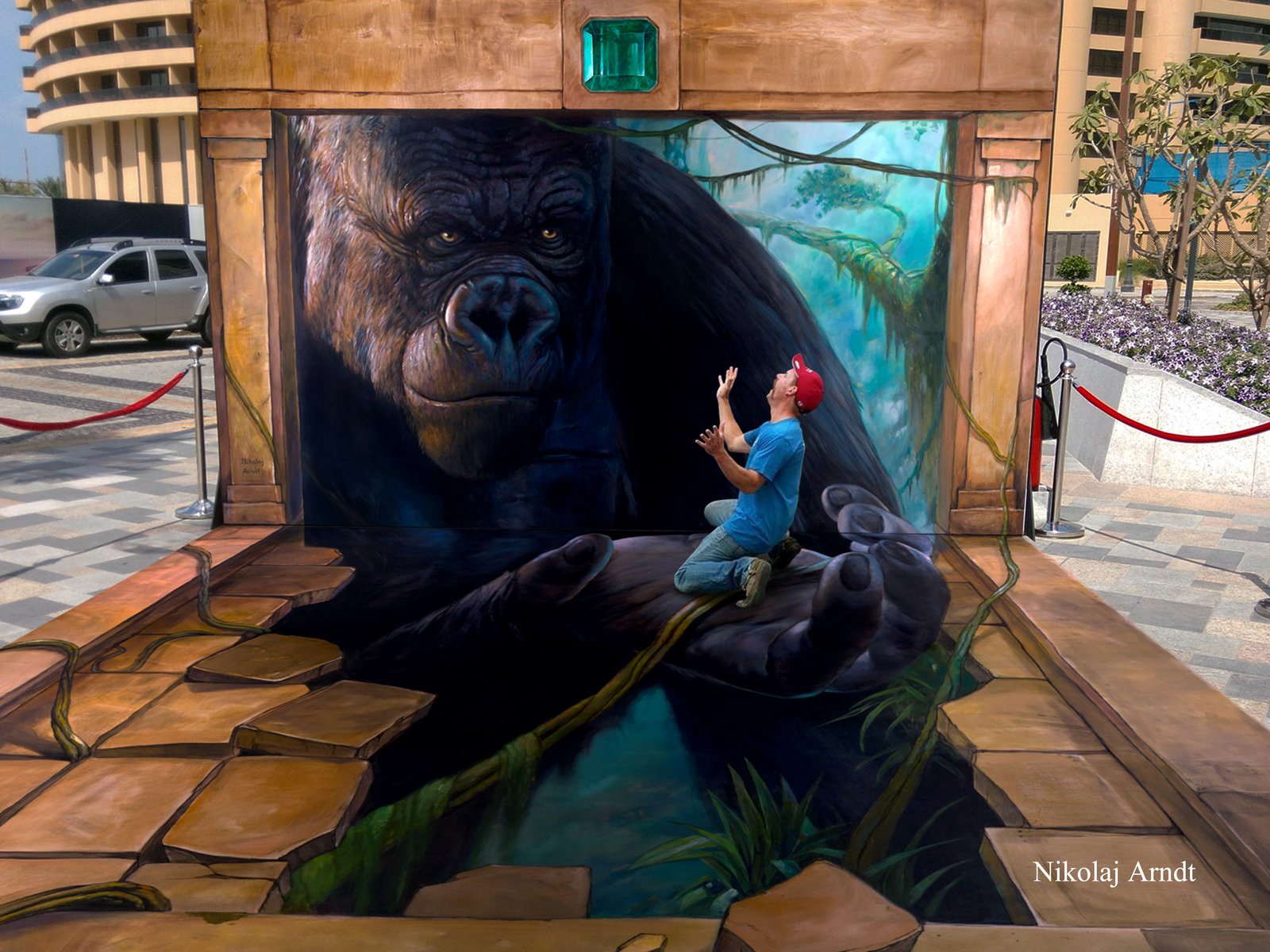
Born in the hinterlands of Russia and educated at the Pedagogic Artist College, Arndt has a clear love of the natural world which he brings to each piece placed, ironically, within the most urban of atmospheres. Animals play a central role in his work, which often captures the style of rich oil paintings, though done on concrete. Striking colors abound as this artist-turned-teacher proves that there’s always something new to learn. Unlike many 3D street artists, his will come out as much as go in, adding to the immersive feeling of creating a whole other world beneath your feet.

View in gallery View in gallery View in gallery View in gallery
Julian Beever
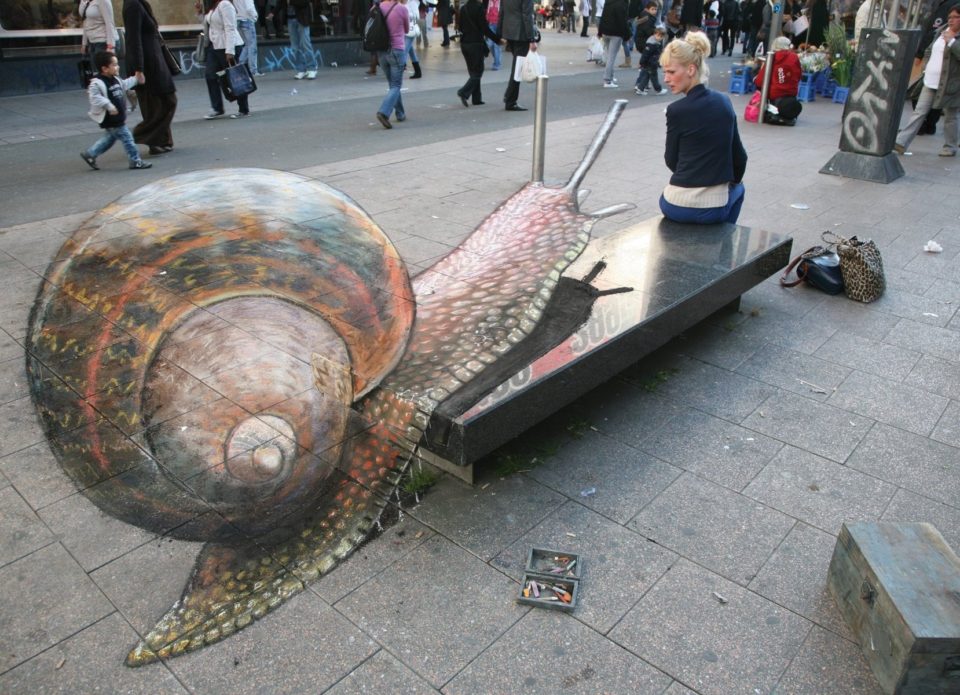
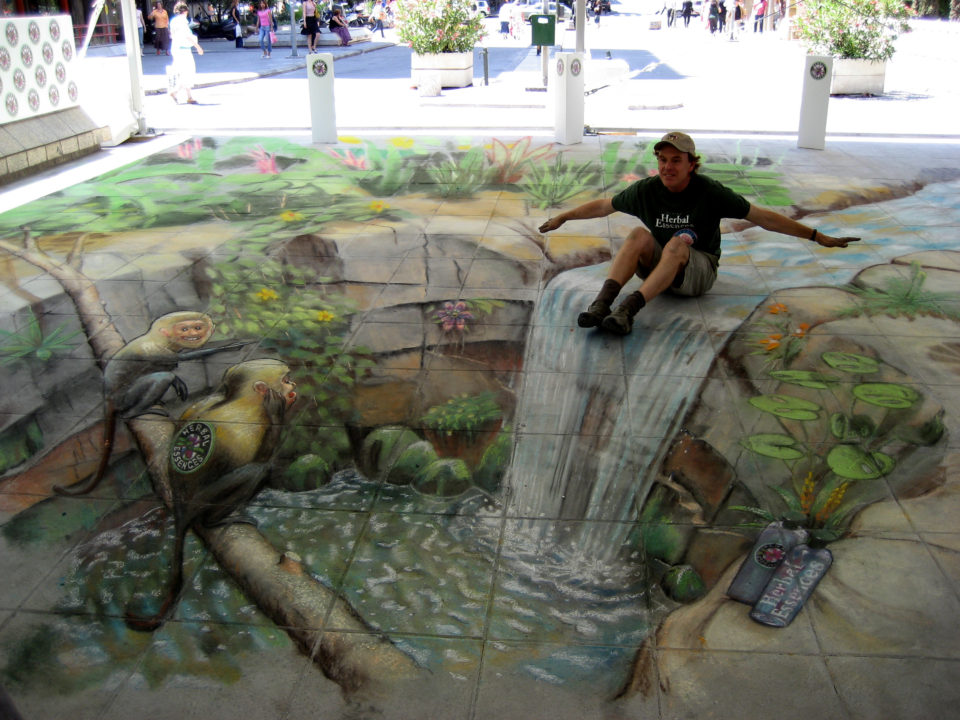
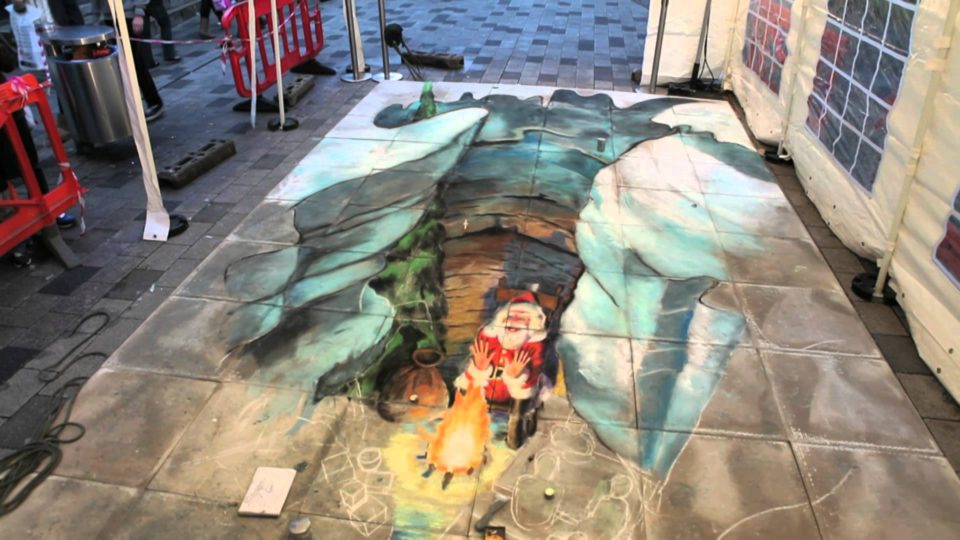
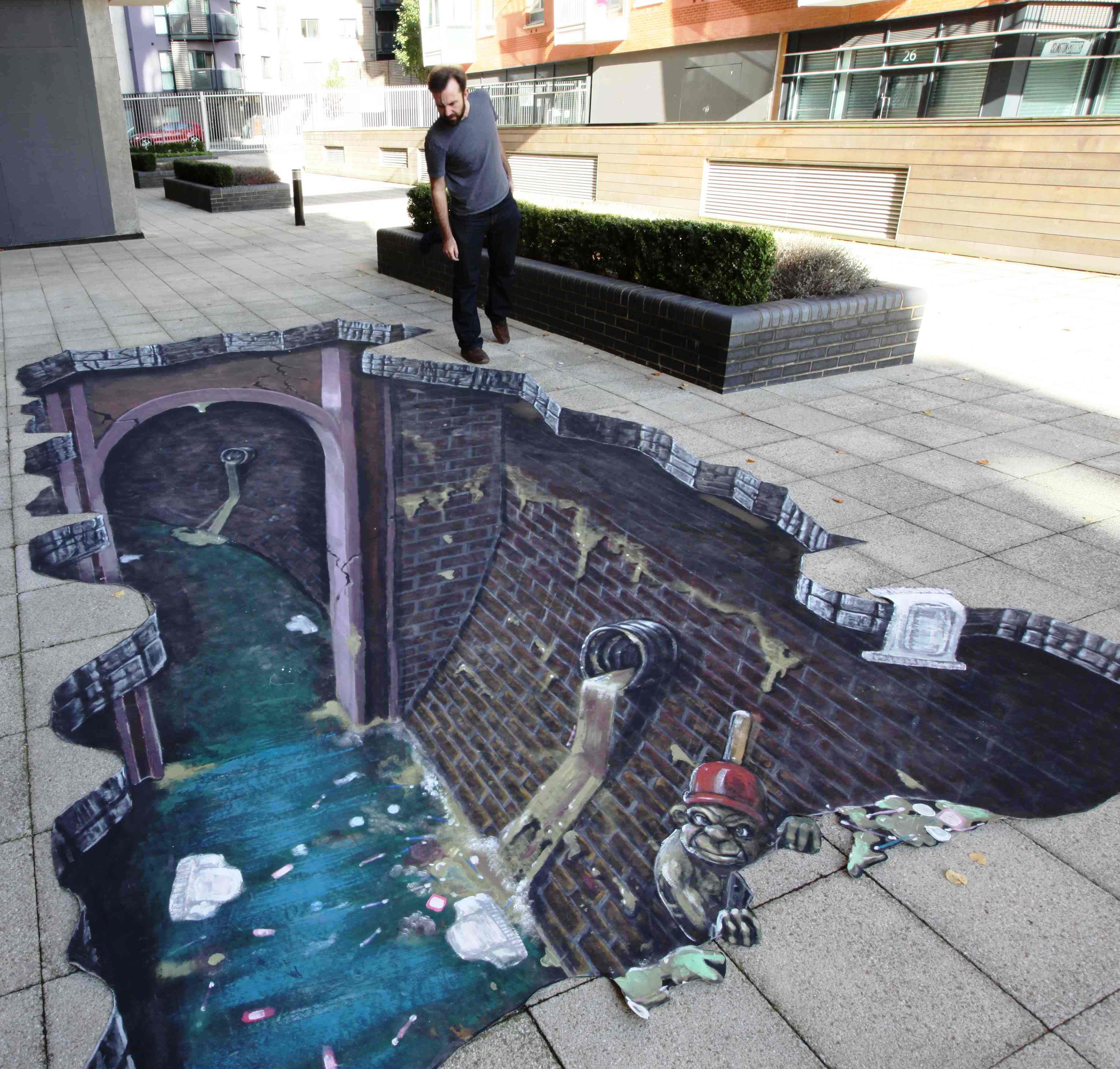
A former busker who learned to ply his trade on the mean streets of the UK, Beever is a self-taught master of the medium. He has a sense of whimsy and self-awareness that is often not present in the 3D world, and his style of anamorphic drawing perpetually challenges the status quo. While many others will apply and reimagine the tools of past artistic eras, Beever is on the bleeding edge, whether he means to be or not. An experiential learner, Beever truly likes to do work for its own sake, though he’ll happily take a check for it with a wink and a smile. View in gallery View in gallery View in gallery View in gallery
‘Chalk God’ Mr. Hou
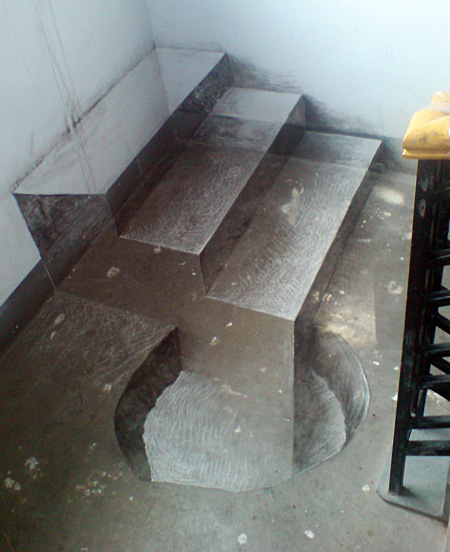
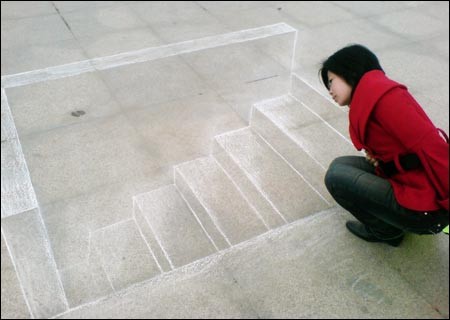
China is not often kind to artists who go outside of the state-approved lines, but Mr. Hou , the rebellious figure known as the “Chalk God” has managed to still capture the attention of the world, by his ingenious use of mathematics and geometry in his drawings. Rather than using the environment as his canvas, Hou manages to create optical illusions with his work that makes it seem a part of the landscape, and begs the eye to try to follow his clever lines.


View in gallery View in gallery View in gallery View in gallery
Leon Keer
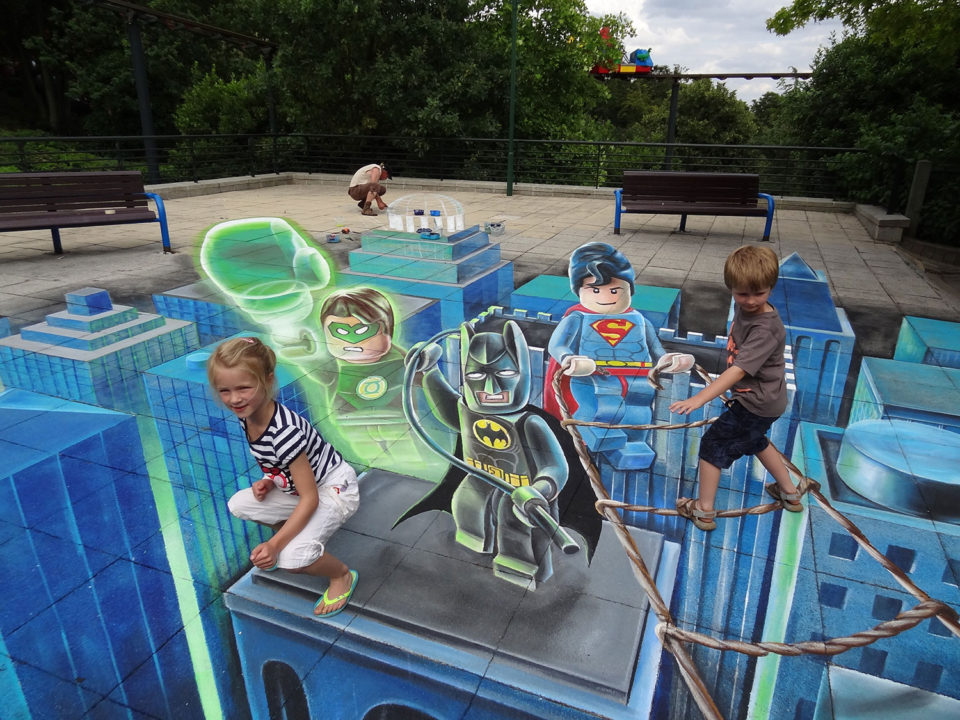
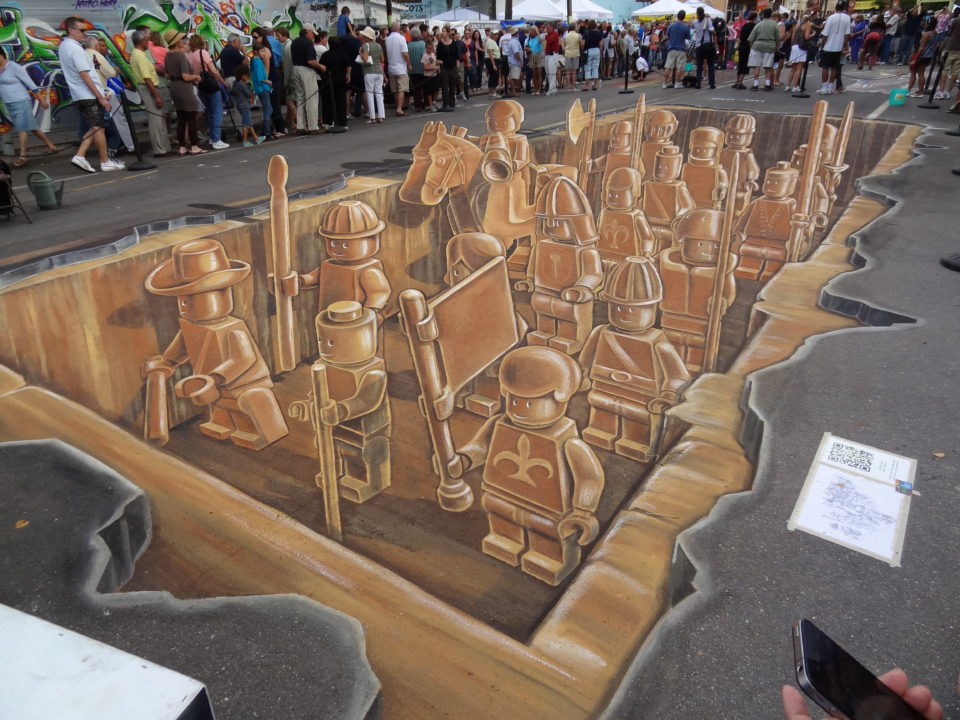
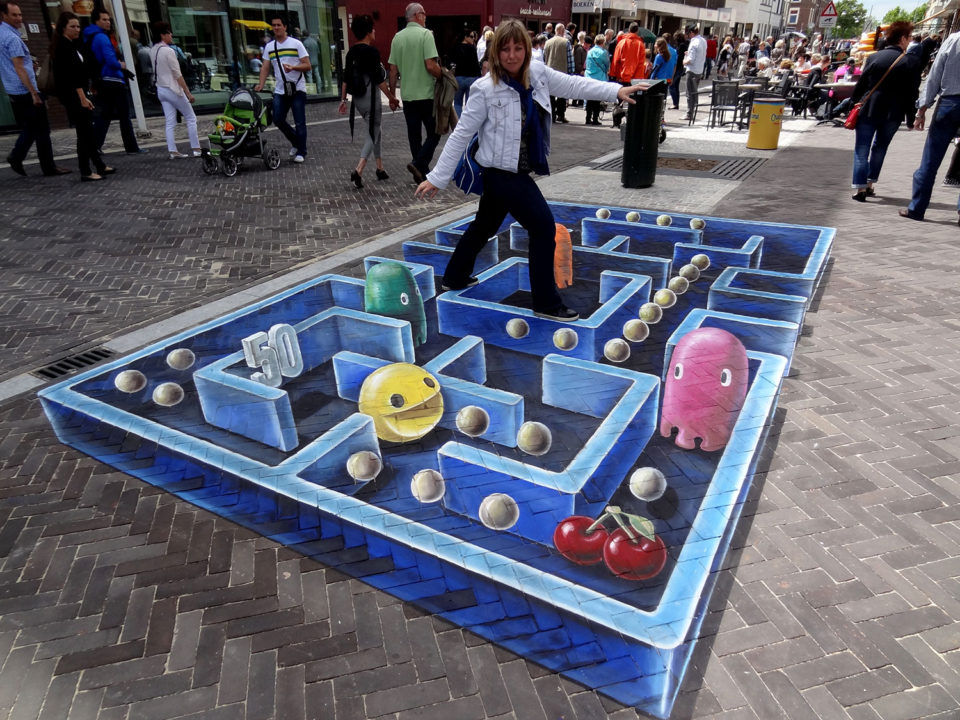
Warhol has nothing on the pop artist Leon Keer , who borrows from every piece of contemporary culture to devise relevant and striking artwork that refuses to be ignored. Riddled with bright colors, it’s clear that Keer started his life as a billboard and media painter, because each work is as bold as brass, yet has a familiarity that makes you feel right at home.

View in gallery View in gallery View in gallery View in gallery
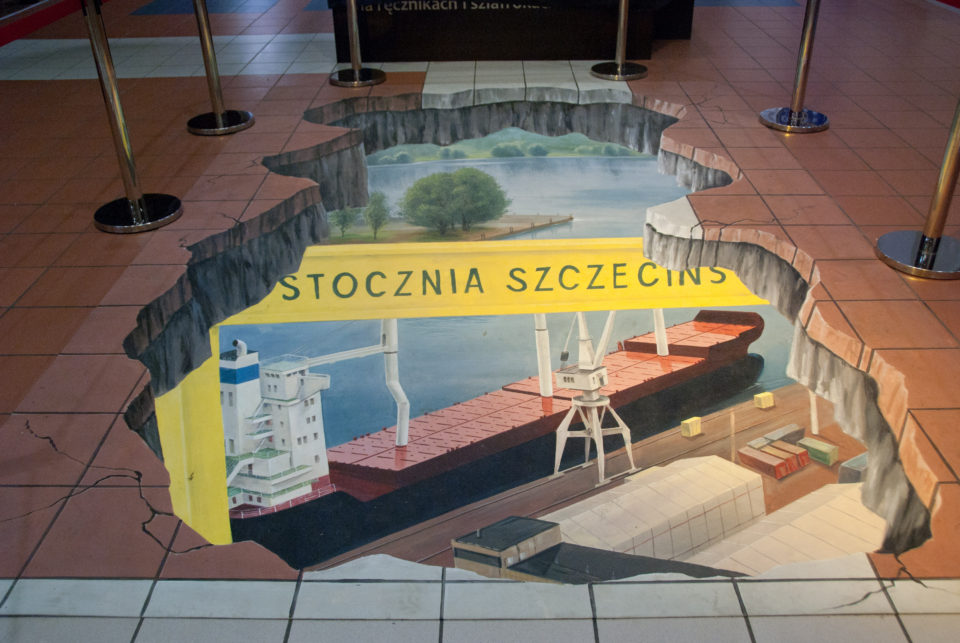
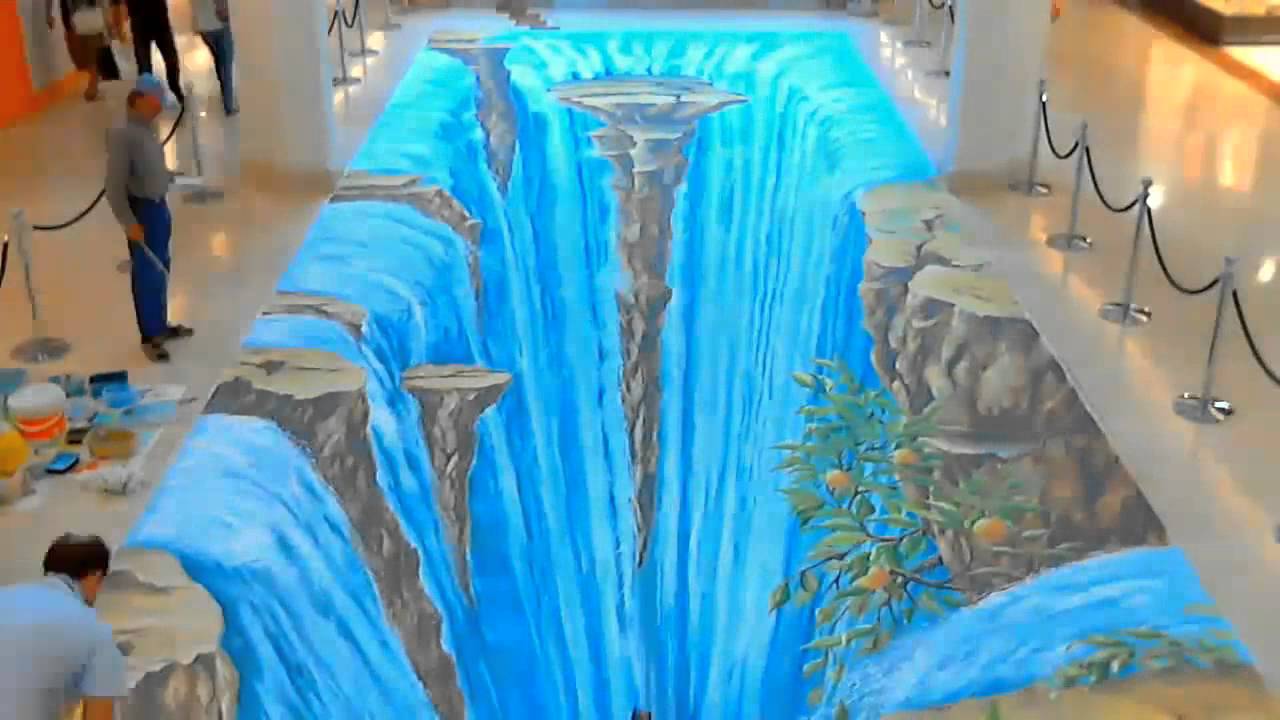
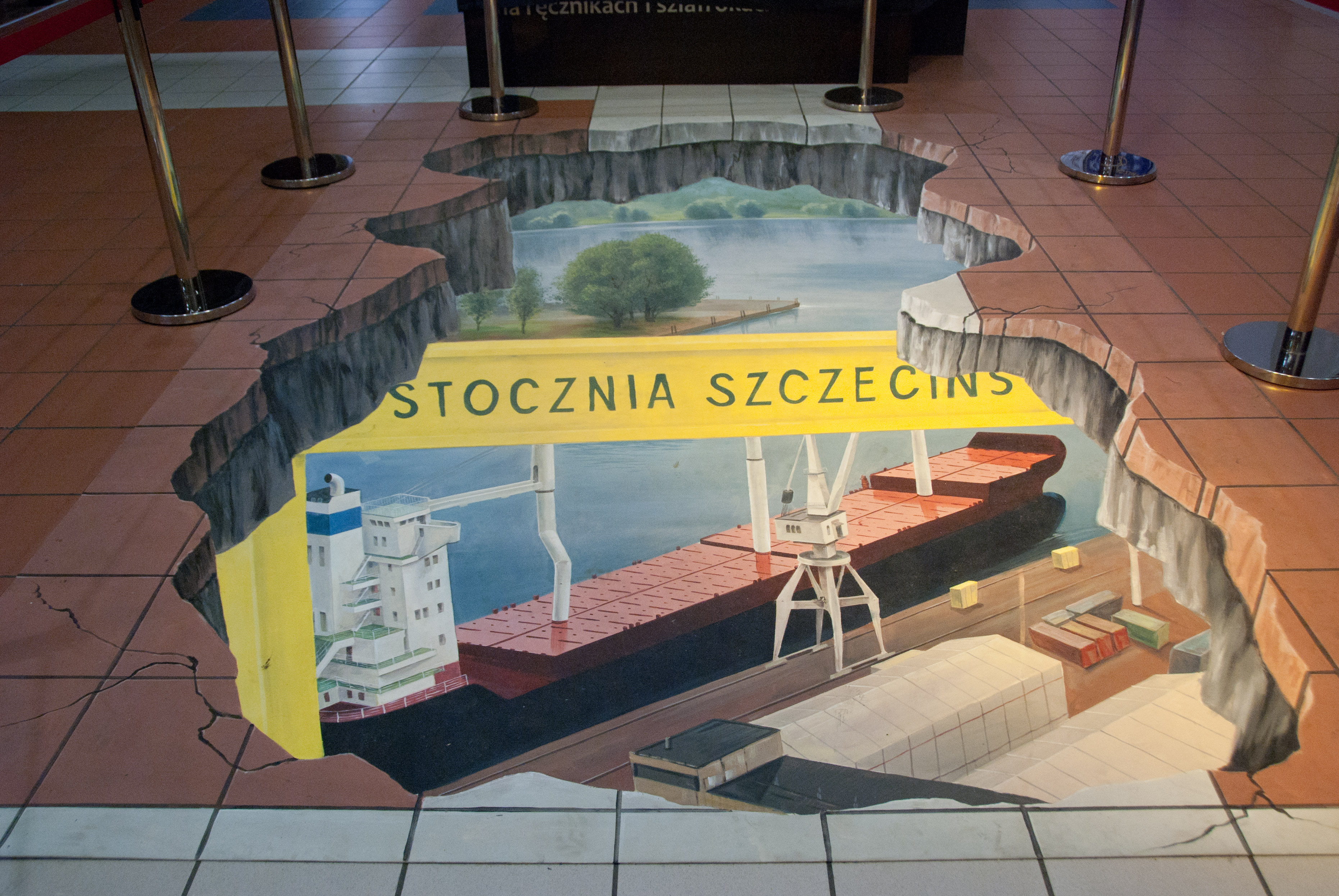
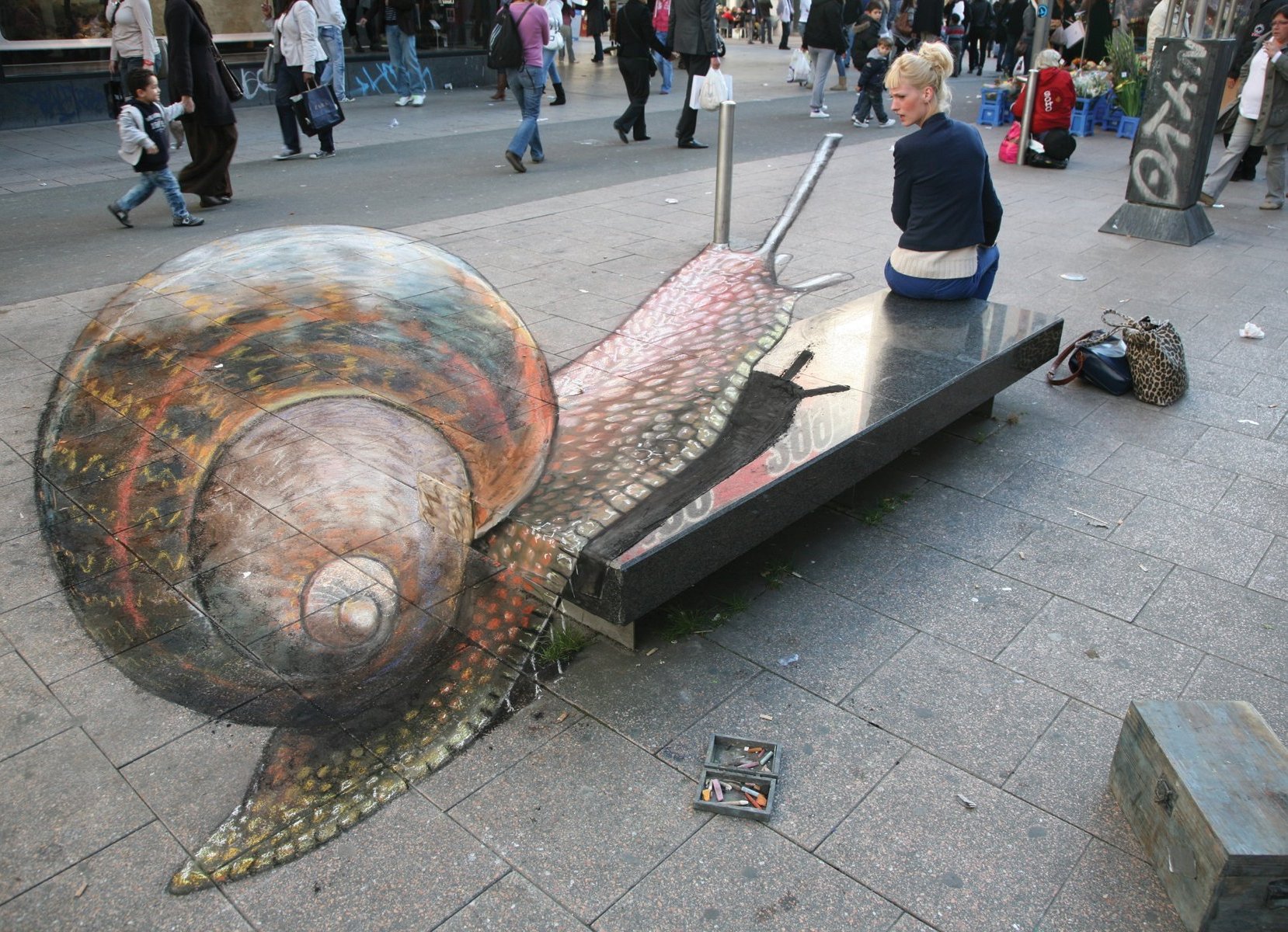
Manfred Stader
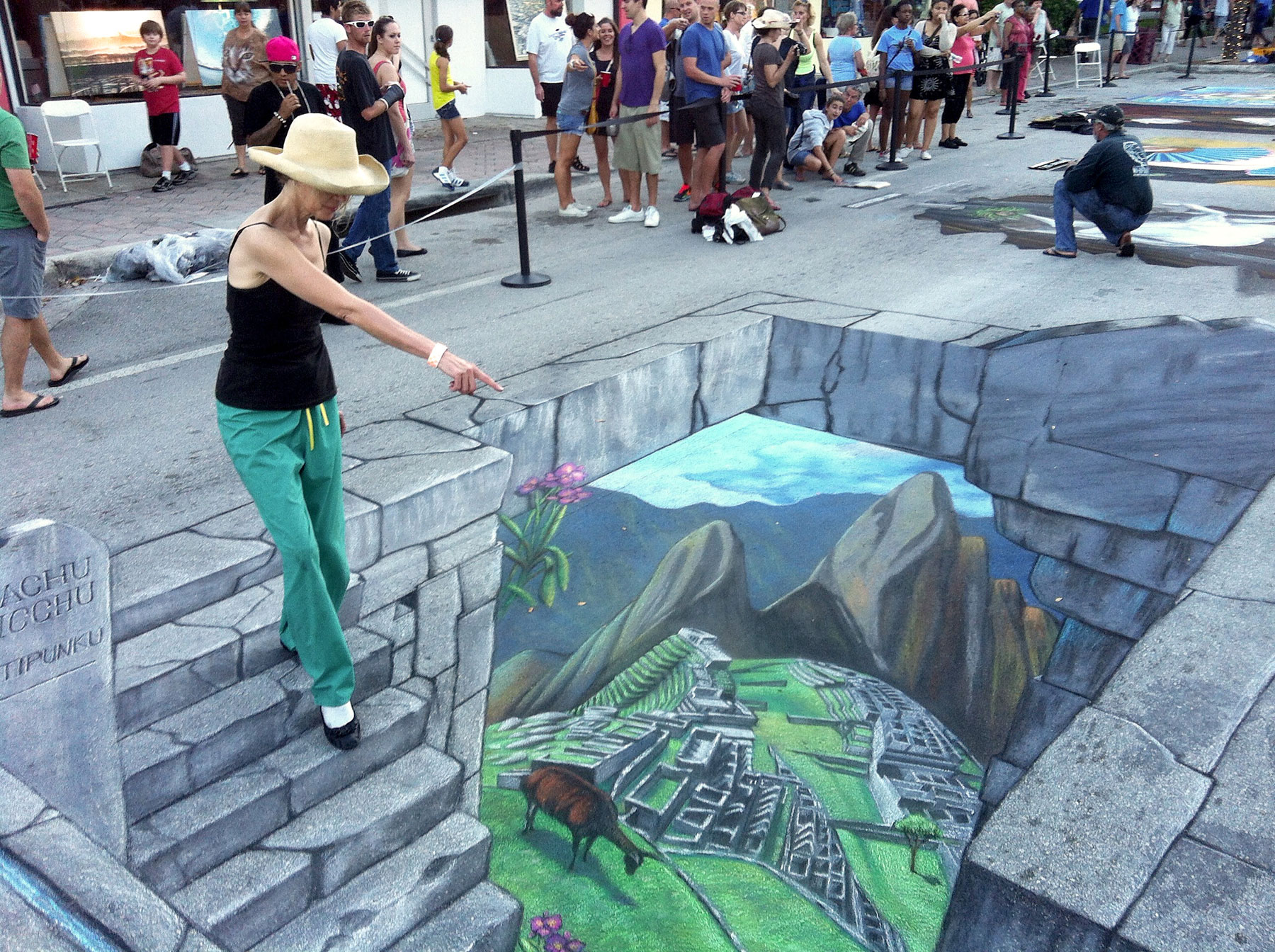
Trained at the prestigious Städelschule school in Frankfurt, Stader could spend his days making glorious masterpieces, but instead he chooses to make oddly realistic masterpieces that have a frolicsome sensibility. His power is to make the ordinary somehow magical by devising works that capture everyday items, but making them larger than life and sometimes a bit too believable.


View in gallery View in gallery View in gallery View in gallery



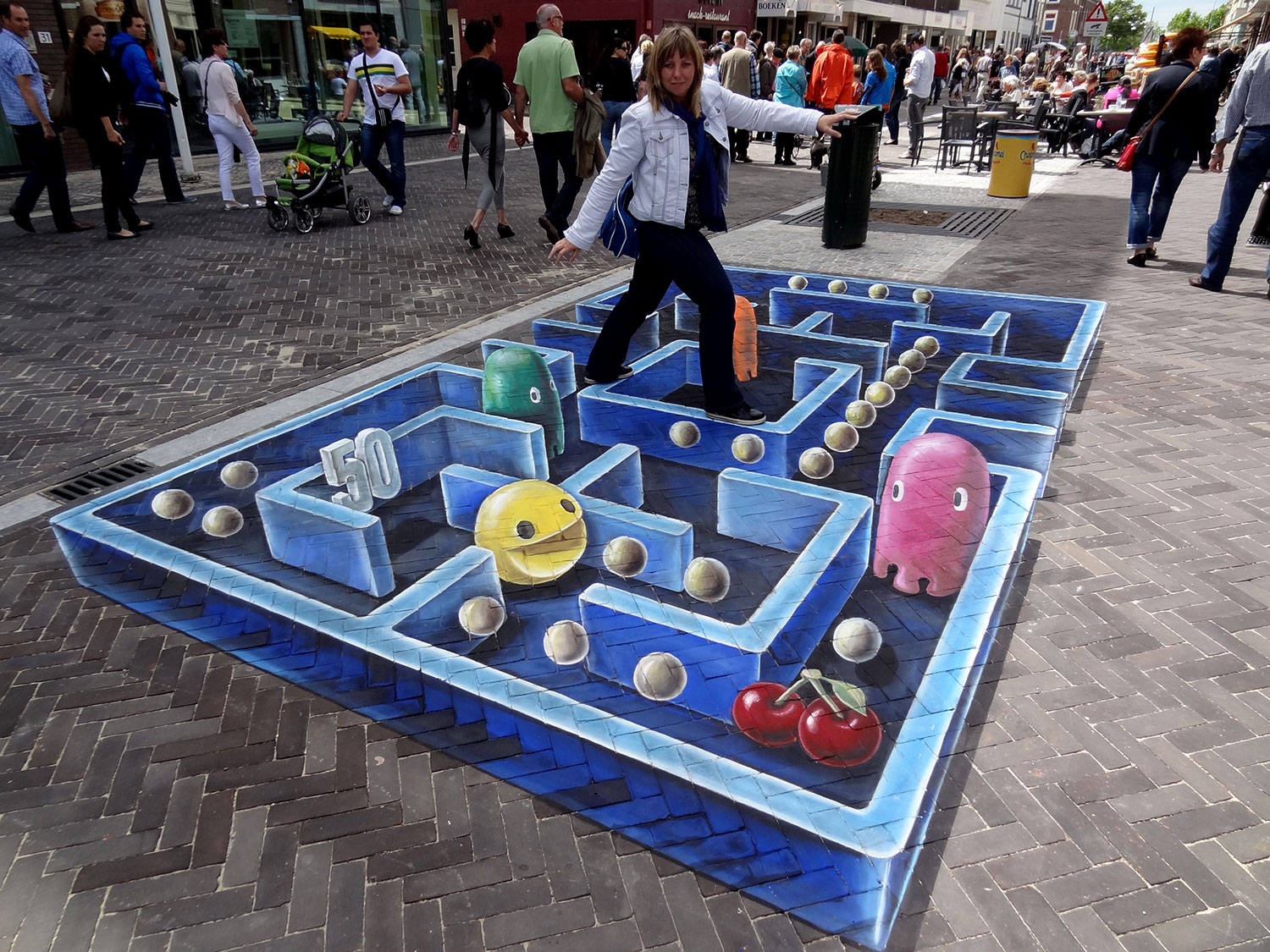
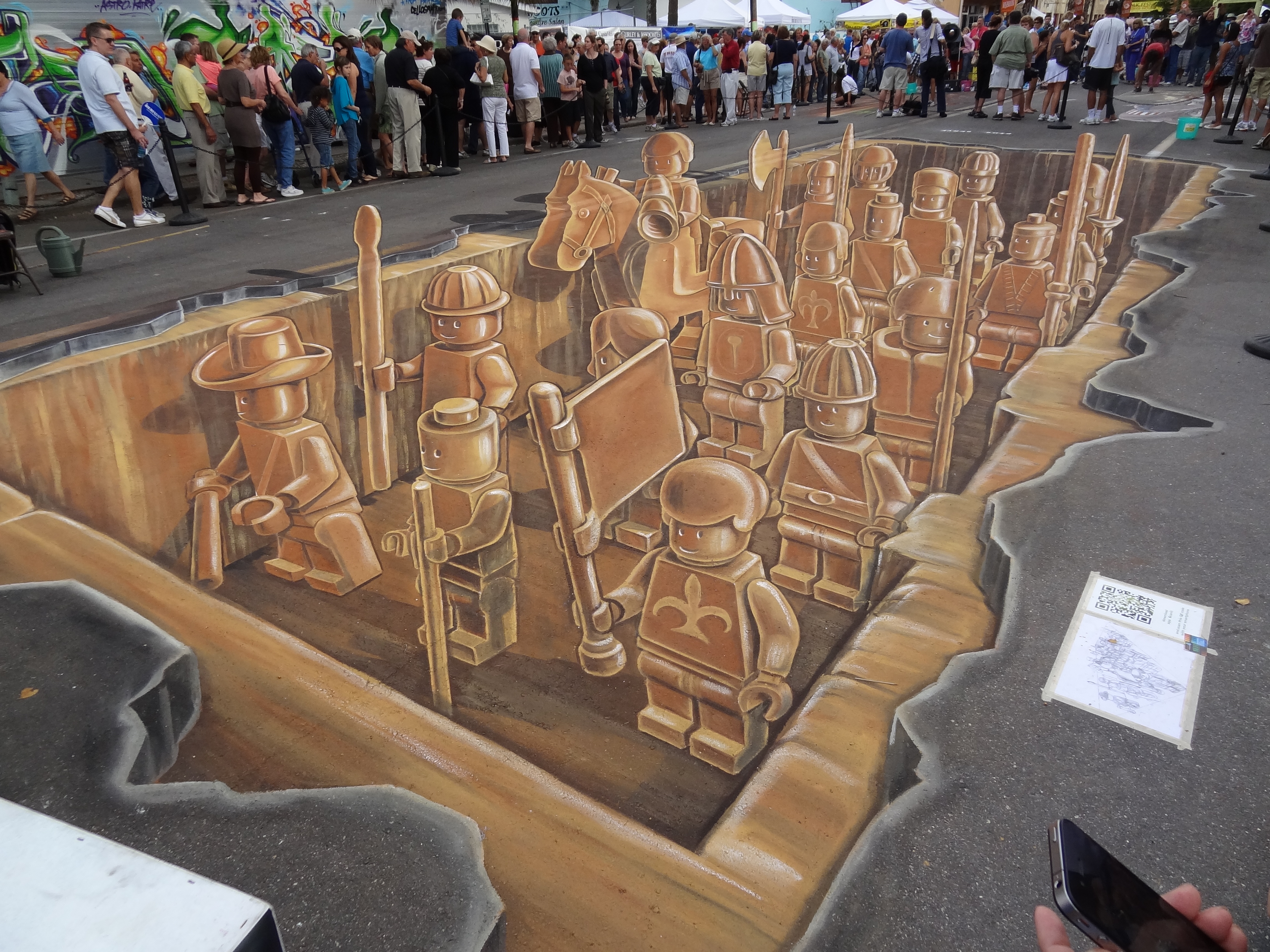
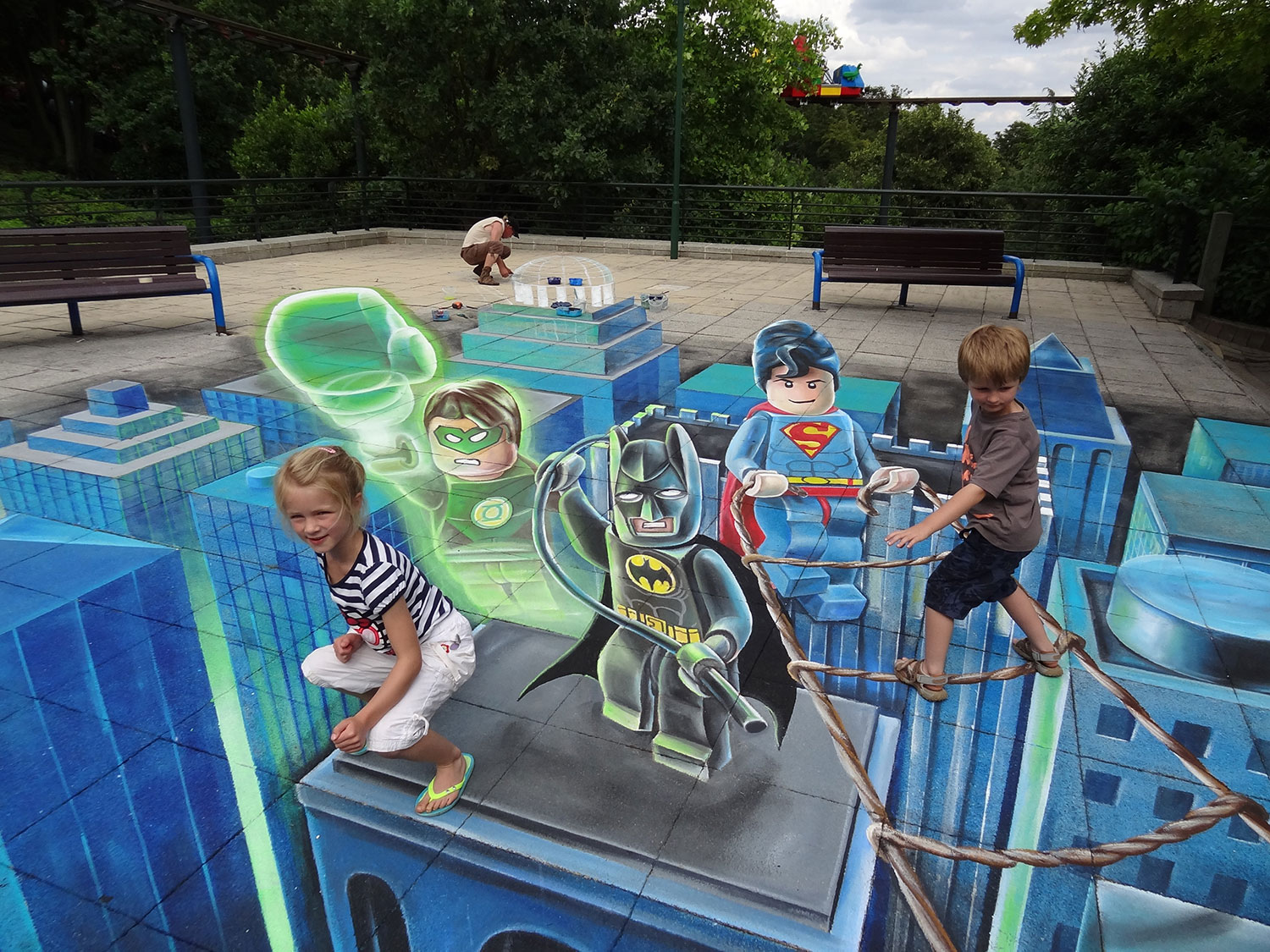
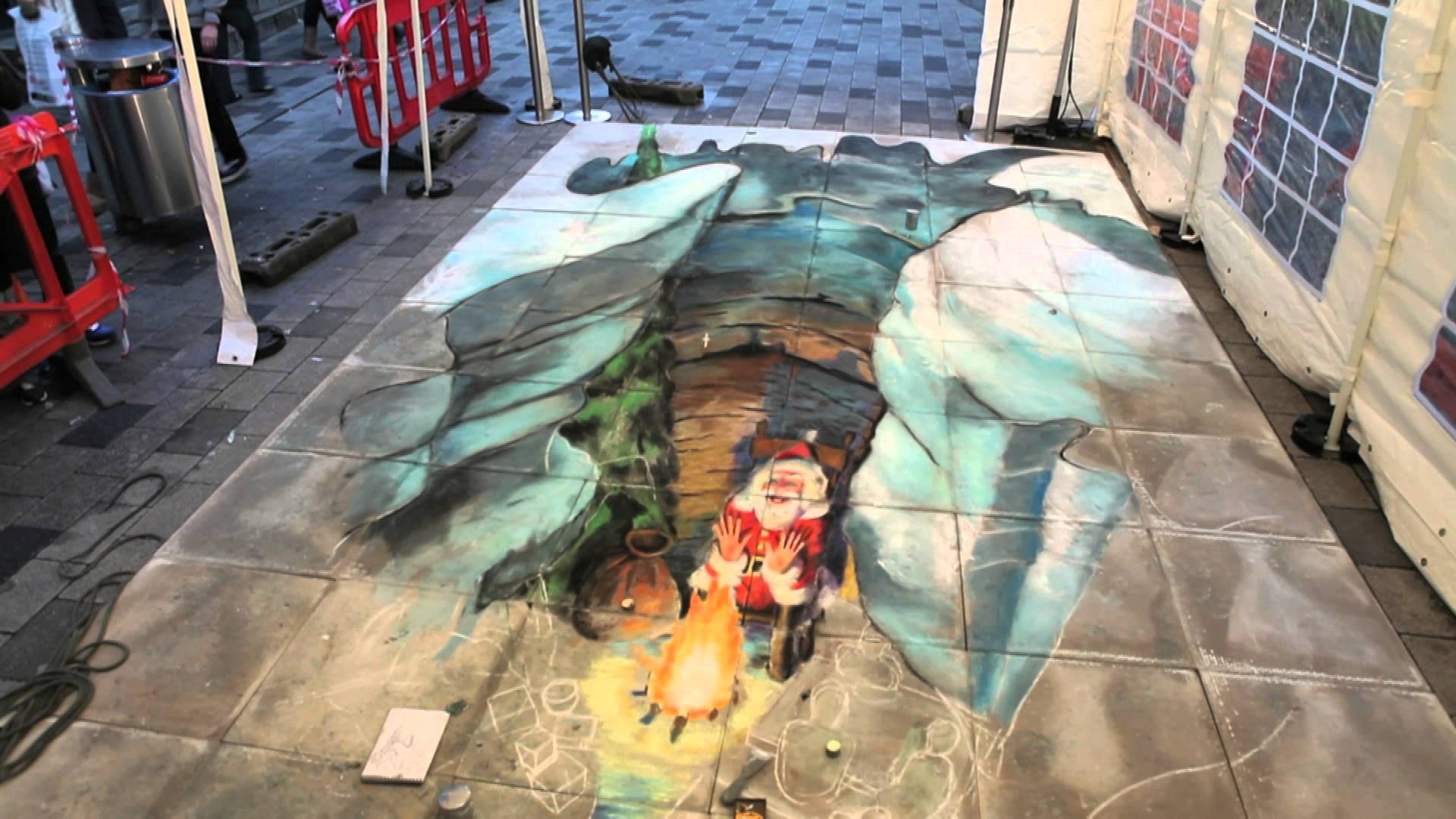


View in gallery
You can ignore every other set of Washington D.C. travel tips you read. There’s so much more to The District than the Capitol Building, a wax museum and a four-hour line for a White House tour. On many trips over the years, I’ve developed a list of must-see travel experiences that I can no longer keep to myself. If you love D.C. like I do, and you’re due for a visit, take these tips with you to experience something special.
[ All Photos and Video by Seamus Payne for TheCoolist.com. Follow Seamus on Instagram . ]
RELATED STORY : A Firsthand Look at Washington D.C.’s Hot Hotel, Neighborhood and Restaurant Options for 2015 Travel
1. The Surreal, Hypnotic “Light Tunnel” of the National Gallery of Art
The amazing light tunnel of the National Gallery of Art is one of D.C.’s best-kept secrets. It occupies a pedestrian tunnel beneath two wings of the gallery, a section of the building that most visitors might miss. This tunnel hosts the lighting artist Leo Villareal ‘s “Multiverse”, a constellation of 40,000+ LED bulbs. These bulbs are controlled by a software system that allows them to shift, twinkle, swirl and dance as guests view the show from below.
On my last visit to Washington D.C., seeing the light tunnel was a top priority. I brought my camera and spent a few hours on site producing the above video.
2. The Solemn Intimacy of the Lincoln Memorial at Night
View in gallery
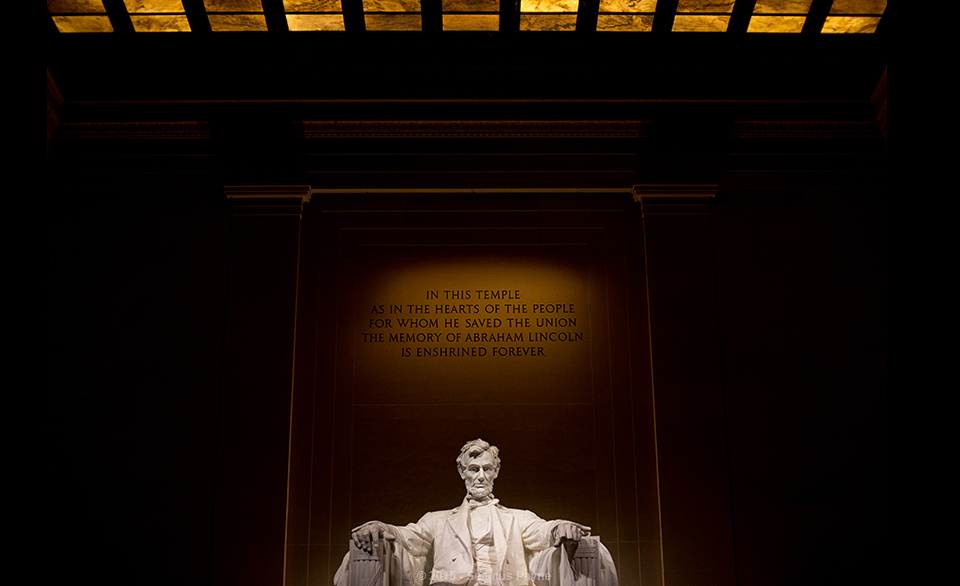
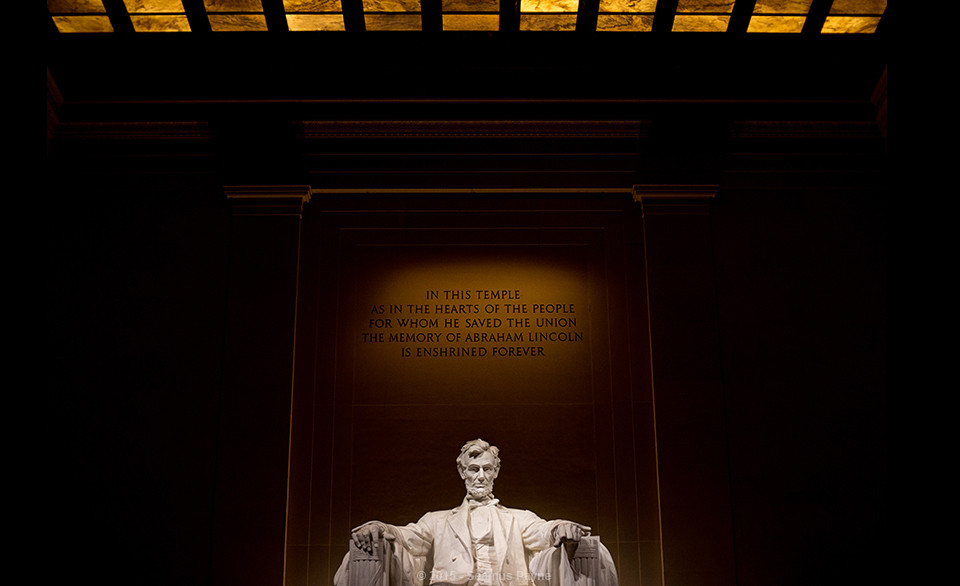
Of all of the tourist hot spots in Washington, D.C., the Lincoln Memorial is one of the busiest. During the day, it can be a bit of a mess of selfie sticks, boy scout uniforms and sweat. In a crowd, it can be difficult to appreciate the sanctity of this monument. Fortunately, the memorial is open 24 hours a day, welcoming guests at all hours of the night.
I visited the Lincoln Memorial at the stroke of midnight, July 4th, 2015. The crowds were mostly driven away by rain, leaving me enough room to reflect on the monument and work with my camera. As a photographer, I knew that the above photograph could only be achieved at night, when all ambient daylight was gone from the interior. This brought out the subtle architecture behind President Lincoln that frames his figure and his message.
If you want to have some intimate time with Abe, or you want to capture a powerful photograph, visit the Lincoln Memorial at night.
3. Amazing International Food – and the Steak Frites of Bistrot du Coin
View in gallery
Washington D.C. is very much an international city. There’s a large population of foreign dignitaries and staff that come to D.C. and want a taste of home. That leads to many unique, lesser known restaurants around the city that cater to these cultures. If you do a little planning and research ahead of time, you can find some pretty special meals you’ll have a hard time finding elsewhere.
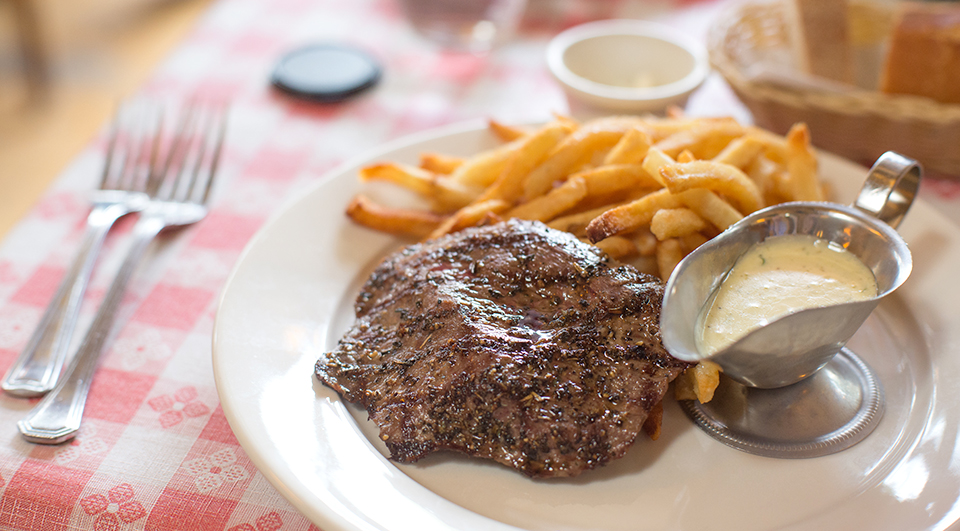
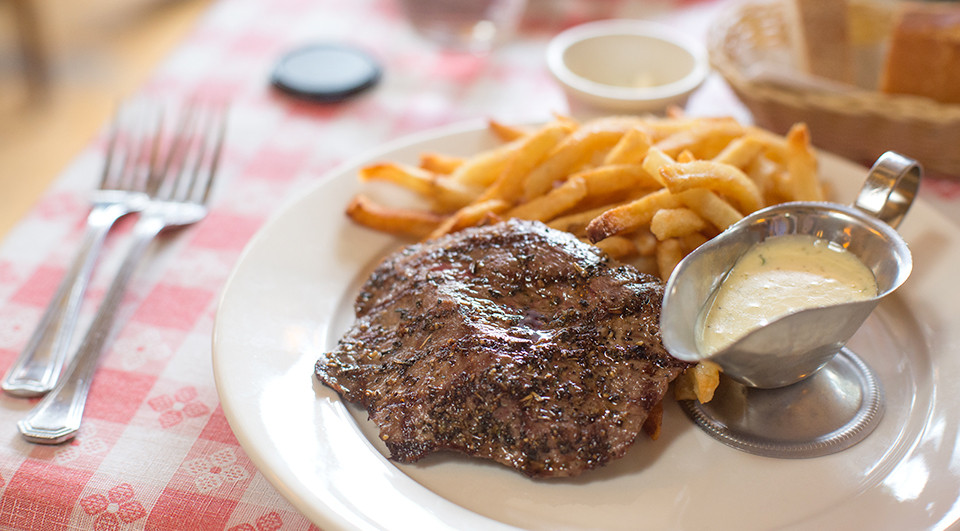
My personal favorite has its share of French and Mediterranean adherents — Bistrot du Coin in Dupont Circle. In contrast to many other French restaurants in the United States, there’s nothing pretentious or progressive about this place. The decor and the menu likely haven’t changed in the last decade. It’s traditional French food the way Grand-maman makes it.
My suggestion? Order Le Steak Maison. It’s your basic Steak Frites with Béarnaise, and it’s the best I’ve ever had. If you’re not feeling steak with fries and want something a bit more formal, try the Navarin d’agneau. That’s lamb stew in a light tomato garlic sauce with vegetables. You’ll be back for more.
4. The DC Metro as a Destination of its Own
View in gallery
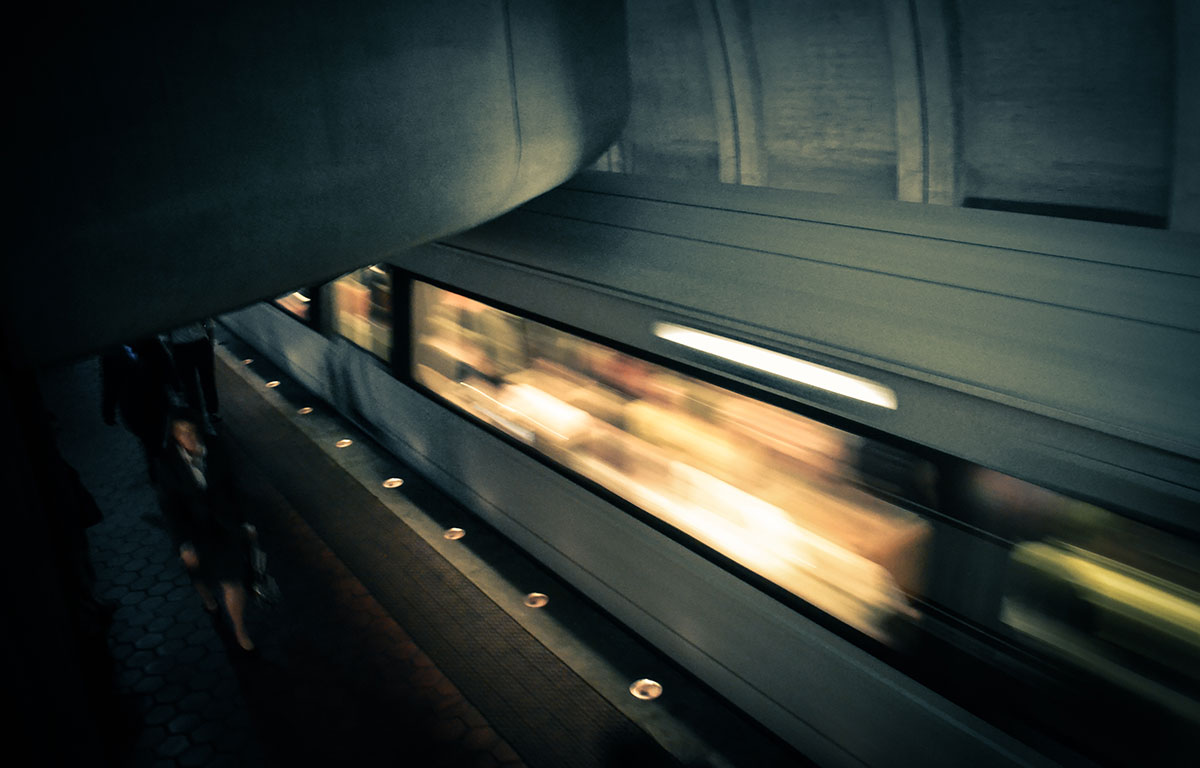
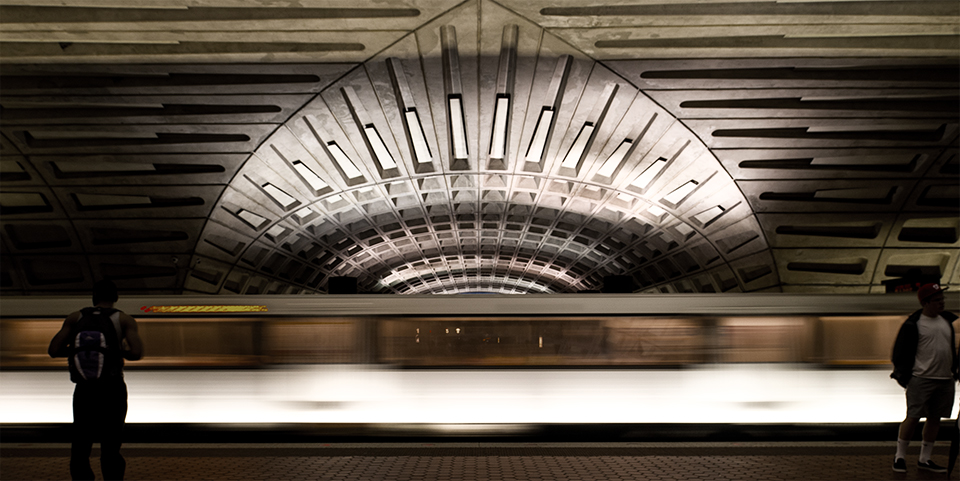
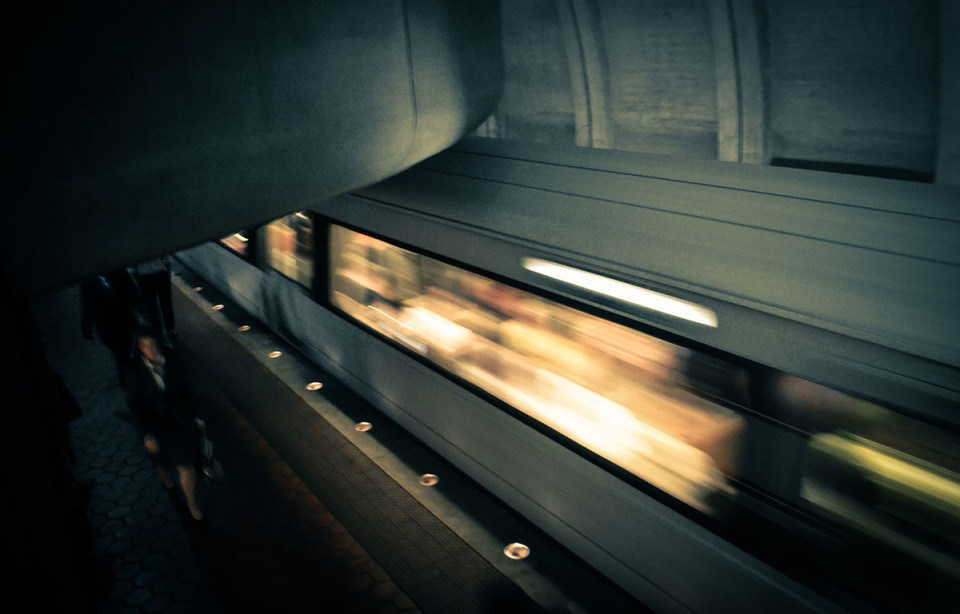
I feel quite strongly that the DC Metro is the most important work of contemporary civic architecture in the United States. It is as functional as it is beautiful, a work of architecture that protects its guests while inspiring awe at the same time. It was recently awarded the 25 Year Award by the American Institute of Architects, an award given to projects that have stood the test of time.
Some daily commuters may loathe the system. As visitors, we’re granted fresh eyes to experience the DC Metro as its own work of art. When you visit Washington, D.C., I encourage you to look at the Metro not as a means to an end, but an end of its own. Take time to step off the subway and to walk through its stations. Experience it slowly. Look at the work of architect Harry Weese and really take in its almost other-worldly nature.
I first experienced the DC Metro at the age of 3, and it was the first time architecture really made an impression upon me. 30+ years later, and architecture is central to my livelihood. As a lifelong fan of architecture, I cannot stress how awe-inspiring and important this work of architecture is. I hope you see it as a destination of its own when you visit D.C.
5. Georgetown’s Historic Identity and Youthful Vibrance
View in gallery
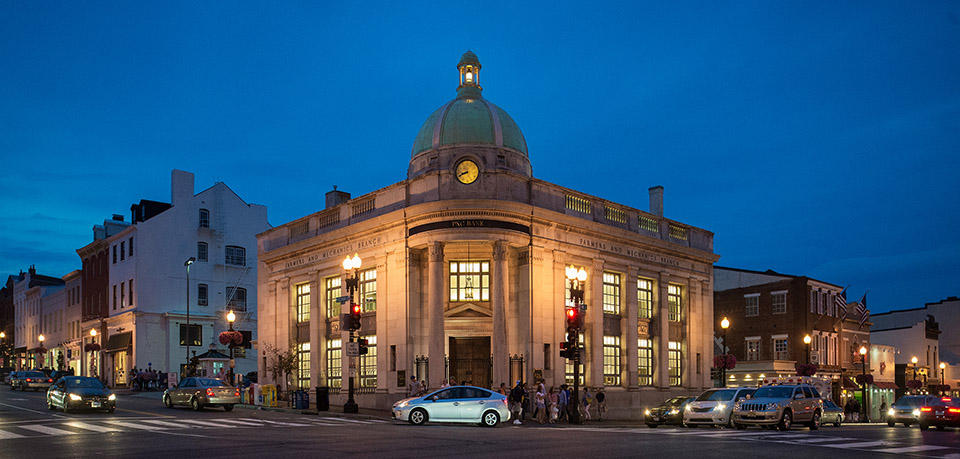
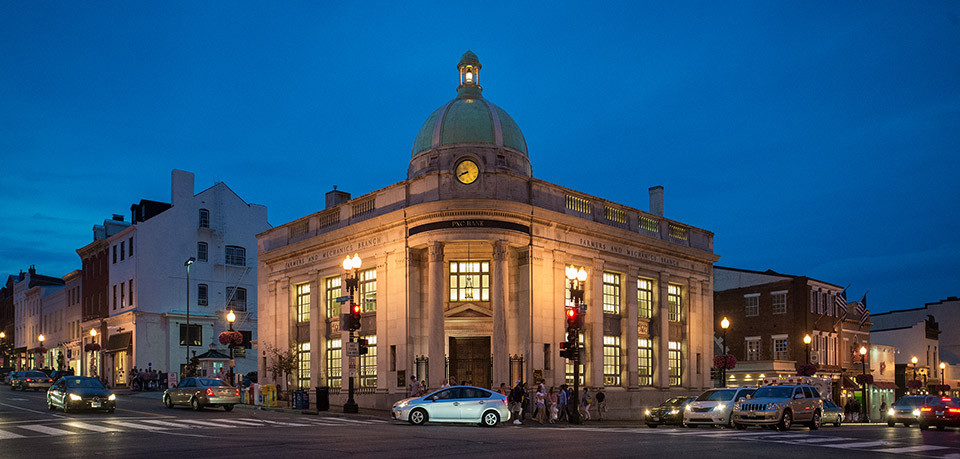
When I travel to Washington, D.C., I stay in Georgetown. It is about as old as a community can get in the United States, but its spirit is young and progressive. There are buildings here in Georgetown that date back to the mid 1700’s, but today they’re occupied by Apple Stores, fashion brands and myriad cupcake shops.
One virtue about Georgetown is that it’s slightly off the beaten path of tourism. Sure, it gets plenty of out-of-town visitors each year, but its a bit out of reach of the Metro and it’s inconveniently far away from most of the museums and monuments. So it feels a little more neighborhood-ish than downtown D.C. proper.
This summer, I spent a long weekend in Georgetown at The Graham Hotel, a travel experience I shared with my friends (and for that trip, sponsors) at Booking.com. If you haven’t experienced a vacation in Georgetown, check out my full photo essay now.